Posts in Education
Why Does CBD Help with Pain?

CBD helps with pain by interacting with your body’s endocannabinoid system—a natural network that helps regulate things like mood, inflammation, and yes, pain. While it won’t get you high, CBD may help reduce discomfort by calming overactive pain signals and lowering inflammation. 

Read More
What’s The Difference Between FECO and RSO?

FECO and RSO are both potent, full-spectrum cannabis oils — but they differ in solvent and intended use. FECO is made with food-grade ethanol and designed for oral or sublingual consumption. RSO was originally made with isopropyl alcohol for topical use, though many retail brands now use food-safe solvents. Both are extremely strong — start with a rice-grain-sized dose!

Read More
How Did Super Boof Get Its Name?

Super Boof got its name from a playful twist on the slang “boof,” once used to describe bad weed. Originally called Blockberry, the strain earned its ironic nickname after users joked it was so strong it “boofed” them. The name stuck—and now Super Boof is a fan favorite for its fruity flavor, potent effects, and unforgettable name. 

Read More
Why Can’t I Get Cannabis Seeds in Dispensaries?

Have you ever walked into a cannabis dispensary hoping to pick up a few seeds to start your own cannabis garden but walked out confused or disappointed?  

If you have then you’re not alone.  

Despite the growing acceptance of cannabis cultivation at home and the expanding legal cannabis market, cannabis seeds are still surprisingly difficult to find in dispensaries.  

But why is that? 

Read More
How did Acapulco Gold get its name?

Acapulco Gold is a legendary sativa-dominant landrace strain from the mountains near Acapulco, Mexico. Its name comes from the strain's distinctive golden-amber bud color, developed under Mexico's coastal sun. Famous for its energetic, clear-headed high, toffee-sweet flavor, and counterculture fame in the 1960s–70s, it remains one of cannabis history's most iconic strains!

Read More
How Is Cannabis Grown?

Cannabis is grown using five main methods: outdoor, indoor, greenhouse, hydroponics, and aeroponics. Outdoor growing is low-cost but weather-dependent. Indoor offers full control year-round. Greenhouses blend both. Hydroponics uses nutrient-rich water for faster growth. Aeroponics mists roots for maximum efficiency. Each method has unique benefits and tradeoffs.

Read More
Why Does Cannabis Cause The Munchies?

Whether it’s a craving for chips, cookies, or anything you find in the fridge, cannabis can send you straight into snack mode. But why does that happen? And what’s going on in your body to make that hunger hit so hard?

If you’ve ever wondered why cannabis makes food taste better and cravings come alive, then you’re in the right place!

Read More
How Did Maui Wowie Get Its Name?

Maui Wowie is a legendary Hawaiian sativa landrace strain grown in Maui's volcanic soil since the 1960s. "Maui" reflects its island birthplace; "Wowie" captures the euphoric, joyful high that made it famous. Known for tropical fruit flavors, energizing uplifting effects, and counterculture fame — including a Cheech & Chong shoutout — it remains a beloved classic!

Read More
How did Panama Red Get Its Name?

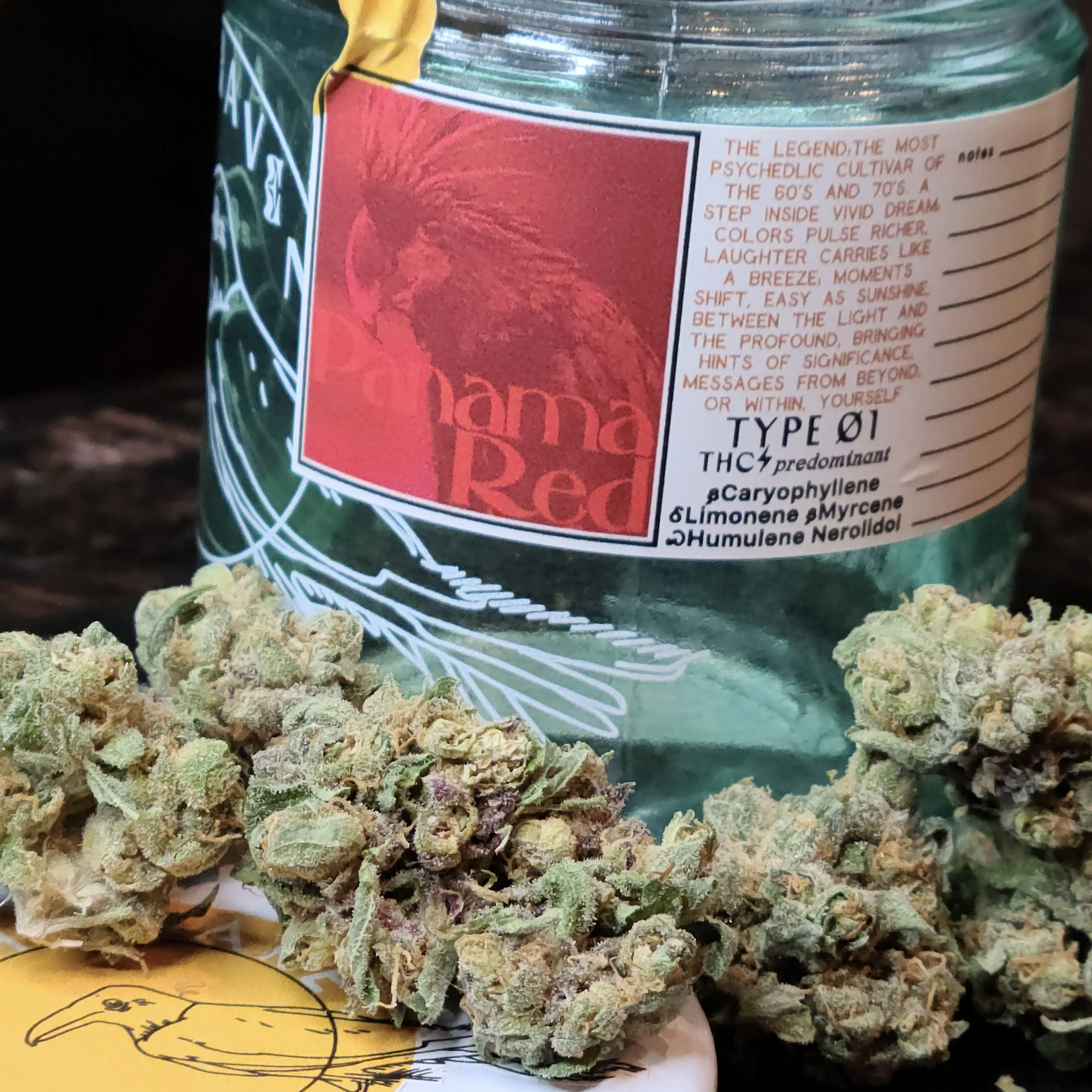
Panama Red is a legendary sativa landrace strain from Panama's Pearl Islands, named for the reddish pistils that give its buds their distinctive color. First popularized in the 1960s, it's known for a mellow, euphoric cerebral high, citrus and grapefruit flavors, and a 12-week flowering cycle that makes it one of the rarest strains on dispensary shelves today!

Read More
Loud, Dank, and Terpy: Decrypting Cannabis Lingo

New to cannabis lingo? "Loud" means strong aroma, "dank" means pungent and classic smelling, "terpy" means high in flavor-rich terpenes, and "fire" means exceptional quality. "Infused" products contain added concentrates for extra potency, while "solventless" means the cleanest extraction methods. Walk into any dispensary and shop like a pro!

Read More
Making Edibles for Beginners: Simple Steps to THC-Infused Treats

To make cannabis edibles, you first need to decarboxylate your flower — bake it at 220°F for 30 minutes to activate the THC. Then infuse it into butter or oil using a slow cooker on low for 2–3 hours, strain, and refrigerate overnight. Your cannabutter is now ready to use in almost any recipe. Start low on dosage and keep cooking temps low!

Read More
The Best Questions to Ask on Your First Dispensary Visit

First dispensary visit? Start by telling your budtender what effect you're looking for — relaxation, energy, sleep, or pain relief. Ask what's easy to dose, how to use a product correctly, and how the loyalty program works. Budtenders at Hashtag Redmond are knowledgeable, non-judgmental, and there to help you find exactly what you need.

Read More
How Do CBD Edibles Work?

CBD edibles work by metabolizing cannabinoids through the liver, converting some THC into Delta-11 THC — a more potent, longer-lasting compound. Effects last 6–9 hours and vary by CBD-to-THC ratio. High CBD = minimal high; high THC = relaxation; equal ratios = sleep support. The entourage effect shapes your overall experience!

Read More
Is THCv really “diet weed”?

THCv (tetrahydrocannabivarin) is a minor cannabinoid nicknamed "diet weed" for its appetite-suppressing and energizing effects. Unlike THC, it's produced when THC is exposed to light, heat, or oxygen. It's less potent than THC, acts faster, and is most commonly found in sativa strains like Durban Poison and Tangie.

Read More
CBD vs. CBN: What's best for sleep?

CBN (cannabinol) is a minor cannabinoid formed when THC is exposed to light, heat, or oxygen. Unlike CBD, which is known for relaxation and pain relief, CBN is prized for its sedative effects — making it especially useful for sleep. Together, CBD and CBN may offer even stronger pain and sleep benefits.

Read More
CBG: Everything You Need To Know

CBG (cannabigerol) is the "mother of all cannabinoids" — the first compound a cannabis plant produces, from which THC and CBD are later derived. Though present in only small amounts in mature plants, CBG is non-intoxicating, mood-lifting, and potentially beneficial for pain, nausea, and inflammation. Known affectionately as "CBGiggles" for its giddy uplifting effects!

Read More
Everything You Need To Know About THC

THC (tetrahydrocannabinol) is the primary psychoactive compound in cannabis. Discovered in 1964 by Dr. Raphael Mechoulam, THC works by binding to CB1 and CB2 receptors in your Endocannabinoid System (ECS), producing effects like euphoria, appetite stimulation, and pain relief. Dosage and your body chemistry both determine your experience.

Read More
5 CBD Facts To Kick-start Any Conversation

CBD (cannabidiol) is a non-psychoactive compound found in cannabis, first isolated in 1964 by Dr. Raphael Mechoulam. Unlike THC, CBD won't get you high. It interacts with your Endocannabinoid System — the body's largest receptor network — and may help with anxiety, pain, insomnia, and reducing alcohol cravings.

Read More
4 Marijuana Facts You Can Drop Into Any Conversation

Cannabis has been used as fiber, food, and medicine for over 5,000 years. It was legal in most of human history until U.S. prohibition in 1937. There are three species — sativa, indica, and ruderalis — and all modern strains are hybrids. THC and CBD weren't isolated until 1964, and the Endocannabinoid System wasn't discovered until 1988.

Read More
The Story of The Panama Red Cannabis Strain

Panama Red is a pure sativa landrace from Panama's Pearl Islands, famous since the 1960s for its psychedelic, euphoric effects and spicy tropical fruit flavor. Panama's cocaine trade nearly wiped out its cultivation, but seed preservationists kept it alive. Washington growers like Raven Grass now cultivate this rare legend for Pacific Northwest cannabis lovers.

Read More