
Making Edibles for Beginners: Simple Steps to THC-Infused Treats
by Jeff Eckenrode, COO

Photo credit: Rai Vidanes
Quick Answer: To make cannabis edibles, you first need to decarboxylate your flower — bake it at 220°F for 30 minutes to activate the THC. Then infuse it into butter or oil using a slow cooker on low for 2–3 hours, strain, and refrigerate overnight. Your cannabutter is now ready to use in almost any recipe. Start low on dosage and keep cooking temps low!
Combining the benefits of cannabis with delicious food is a hobby that anyone can enjoy!
Whether you’re baking your first batch of “special” brownies or dreaming of the perfect THC-rich chocolate sauce to complete your favorite dessert, cooking cannabis goodies can be as much fun as eating them!
But where does one get started?

Photo credit: Bryam Blanco
Unfortunately, infusing your favorite foods with THC is just a little more complicated than throwing some bud in a bowl with flour and sugar.
Luckily, baking with cannabis is not modern alchemy. In fact, it’s a straight-forward process that you can refine with a little practice and some tasty ingredients.
Today, we’re going to prepare you with everything you need to know to get started or to perfect your cannabis baking skills!

Photo credit: Margo Amala
Why can’t I just mix raw cannabis into my batter?
I mean, you could if you really wanted to ...
But it’s unlikely you would be happy with the results!

Photo credit: Len Mora
That’s because, in its natural, raw state, THC is inert. If you ate raw cannabis buds or mixed some in with your afternoon tea, you wouldn’t feel any of the effects you’re likely looking for!
So, how do we make the most out of the cannabis we use in our baking?
First, we have to “activate” the THC in cannabis by exposing it to heat. This process has a specific and fancy term called “decarboxylation".

Photo credit: Ty Finck
What’s THC “decarboxylation”?
In the simplest terms, when raw cannabis is exposed to heat or left to its own devices over a long period of time (like months or years), the THC in the plant undergoes a chemical reaction: decarboxylation.
If you've smoked weed or nibbled on an edible, then you're already familiar with activated THC and/or CBD that has gone through decarboxylation!
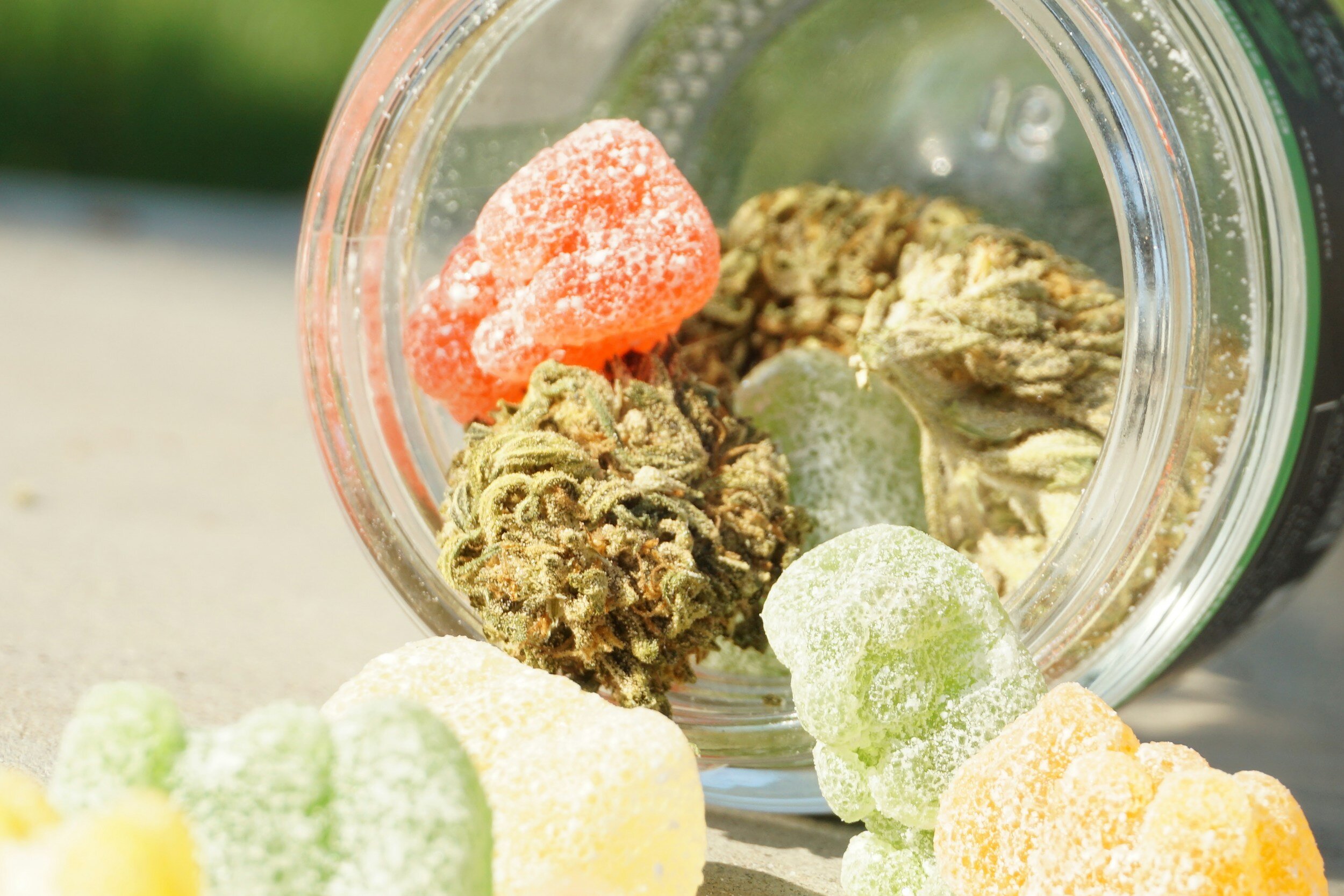
Photo credit: Elsa Olofsson
Decarboxylation is the chemical reaction that removes a “carboxyl” group (the “a” in THCA and CBDA) from the cannabinoid molecule. This changes the molecule from its inert, acidic form into an activated form.

Photo credit: Budding .
How do I “decarboxylate” my cannabis for cooking?
To prepare your cannabis for baking, you’ll want to break up your dried cannabis flowers with your fingers or a grinder.

Photo credit: Len Mora
Once your buds are broken up, place your ground cannabis on a baking sheet, and bake it in an oven at 220 degrees Fahrenheit (104 Celsius) for approximately 30 minutes.

Photo credit: Erik Mclean
Can I decarboxylate my flower faster at a higher temperature?
The short answer is no. If you crank up the heat in your oven to speed things up, the THC or CBD you’re trying to activate will boil off!
The result? You’re left with a baking sheet full of crispy weed, with little to none of the cannabinoids you were hoping to use!
So keep the temperature low, and let the oven go slow.
30 minutes at 220 degrees Fahrenheit will do the trick!
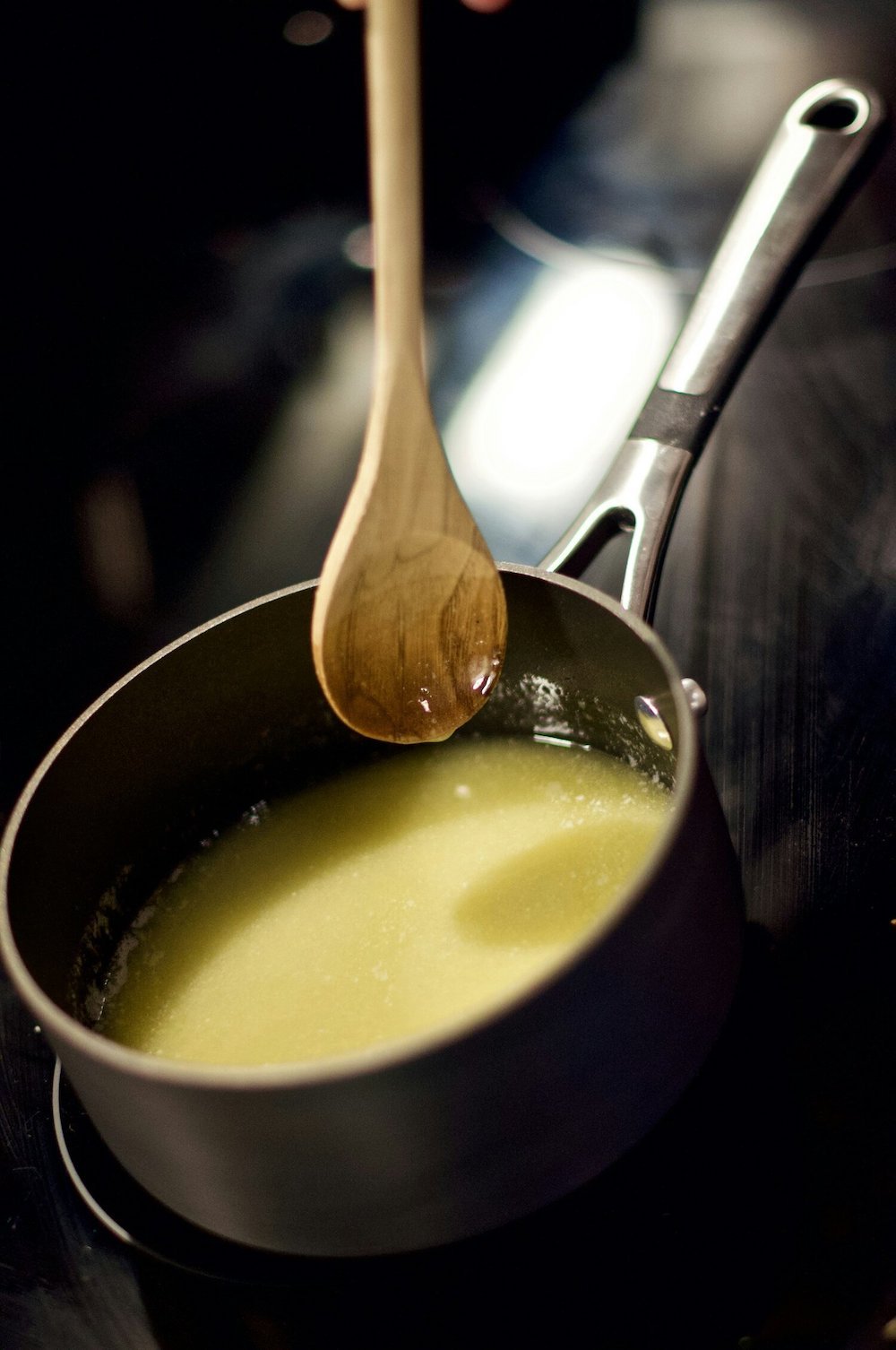
Photo credit: Dan Dennis
How can I infuse my own butter or oil with THC for baking?
Once your cannabis is ready to go, there’s one more step before it can be used in traditional baking recipes: infusing cannabis into a butter or oil-based medium.
Doing so allows you to add THC or CBD to almost anything: yogurt, honey, butter, coconut oil, flour, sugar, and more.

Photo credit: Fulvio Ciccolo
And the best part is: once you’ve infused your butter or oil with THC or CBD, you can use it again for future recipes!
It makes cooking with cannabis a breeze and greatly reduces the amount of time and effort needed to incorporate cannabis into your dishes or desserts.
How do I adjust the strength of my THC butter or oil?
In short, the more cannabis you use, the higher the potency of your edible will be. To help you figure out how much cannabis you should use, try this calculator by Veriheal! (link)
Using a scale is also a terrific idea for infusing your butter or oil. So if you have one around, it will come in handy with this step.

Photo credit: Budding .
A step-by-step guide to making cannabis butter for the first time
Cannabis infused butter or “cannabutter” has long been the favorite of cannabis chefs. So here are the steps you’ll need to prepare your very own at home!
Our personal favorite method uses a slow cooker with ground, decarboxylated cannabis flower and butter.
Add butter and cannabis to slow cooker
First, add the butter and ground, decarboxylated flower to your slow cooker, and set it on low for 2-3 hours to allow the cannabis to infuse with the butter.
Strain out ground cannabis
Once infused, you’ll want to strain out the leafy, green bits from your mixture (a cheesecloth or strainer is great for this step).

Photo credit: Jordane Mathieu
Cool and store infused butter in the refrigerator
Once strained, cool your cannabis butter in the fridge so it can set (doing so overnight is recommended).
Just like normal butter, you can store your cannabis butter in the fridge for weeks! Just keep in mind: cannabis butter does go bad over time.
To keep your butter as fresh and tasty as possible, place it in an airtight container or a Ziploc bag.

Photo credit: Clem Onojeghuo
Can I cook with my infused butter or oil?
You sure can!
Word from the wise, though: cooking or baking at high temperatures will boil off much of the THC/CBD you worked so hard to include in your butter or oil.
So make sure to stick to low baking and cooking temperatures for the very best results!

Photo credit: Edgar Castrejon
Where can I find Cannabis products for Cooking?
Whether you’re shopping online or in Redmond, we’re here to help you find what you need, when you need it. That includes cannabis products to help you infuse your cooking with CBD, THC and flavor!
Click on our online menu link below to see our current availability.
FAQ Making Edibles for Beginners
Why can't I just mix raw cannabis directly into my baking recipes?
Raw cannabis contains THCA — the inactive, acidic form of THC — which produces zero intoxicating effects when eaten. You could mix raw flower into your brownie batter all day and feel absolutely nothing from it. To get the effects you're looking for, the THCA first needs to be chemically converted into active THC through a process called decarboxylation. Without that step, you're just adding some very expensive herbal seasoning to your baked goods. The good news is that decarboxylation is simple, requires no special equipment, and takes less than 45 minutes in a standard home oven.
What is decarboxylation and how do you do it at home?
Decarboxylation is the heat-triggered chemical reaction that activates the cannabinoids in raw cannabis by removing a carboxyl group from the molecule — converting inactive THCA into active THC and CBDA into active CBD. At home, it's straightforward: grind or break up your dried cannabis flower, spread it evenly on a baking sheet, and bake at 220°F (104°C) for approximately 30 minutes. That's it! The low temperature is important — cranking the heat to speed things up will actually boil off the cannabinoids you're trying to activate, leaving you with crispy, potency-free flower. Low and slow is the only way to go.
How do you make cannabutter step by step? Once your cannabis is decarboxylated, making cannabutter is a three-step process. First, add your decarbed flower and butter to a slow cooker set on low, and let it infuse together for 2 to 3 hours — this is what pulls the activated cannabinoids out of the plant material and into the fat. Second, strain the mixture through a cheesecloth or fine strainer to remove all the leafy green plant material, leaving you with smooth, infused butter. Third, pour the strained butter into an airtight container and refrigerate overnight to let it set. Your cannabutter is now ready to use in any recipe that calls for regular butter!
How do you control the potency of homemade cannabutter?
Potency is directly tied to how much cannabis you use — more flower means stronger butter, less flower means milder butter. Because everyone's tolerance is different and the THC percentage of flower varies by strain, there's no universal "right" amount. A dosage calculator (like the one from Veriheal linked in the post) is a great tool for dialing in your target potency before you start. Using a kitchen scale to measure your cannabis by weight rather than eyeballing it also makes a big difference in consistency, especially once you start making cannabutter regularly.
Can you use cannabutter in any recipe that calls for regular butter?
Yes — and that versatility is exactly what makes cannabutter such a beloved tool in cannabis cooking! Once your infused butter is made, it can be swapped in for regular butter in virtually any recipe: cookies, brownies, sauces, pasta, toast, you name it. The one important caveat is temperature: baking or cooking at high heat will degrade and boil off the THC you worked to activate, so stick to lower cooking temperatures for the best results. And remember — edibles take longer to kick in than smoking or vaping (typically 30 minutes to 2 hours), so start with a small amount and be patient before going back for more.
Can you use cannabis-infused oil instead of cannabutter?
Absolutely! Cannabis infuses beautifully into any fat-based medium, not just butter. Coconut oil, olive oil, and vegetable oil all work well using the same slow cooker method. Infused oils are especially useful for vegan or dairy-free cooking, and they tend to have a longer shelf life than butter. The same rules apply — low and slow infusion, strain thoroughly, store in an airtight container in the fridge, and keep cooking temperatures moderate to preserve potency. Once you've got infused oil in your fridge, you can add cannabis to almost anything without anyone being the wiser.
Want to learn more about making cannabis edibles?
Then check out our collection of related posts here!