
5 CBD Facts To Kick-start Any Conversation
By Jeff Eckenrode, COO
Photo credit: Aaron Blanco Tejedor.
Quick Answer: CBD (cannabidiol) is a non-psychoactive compound found in cannabis, first isolated in 1964 by Dr. Raphael Mechoulam. Unlike THC, CBD won't get you high. It interacts with your Endocannabinoid System — the body's largest receptor network — and may help with anxiety, pain, insomnia, and reducing alcohol cravings.
By now you’ve probably heard about “CBD”. But what is it? And why is it a big deal?
If you’ve had questions like this before (or are just looking for a fun ice breaker at your next party), then you've come to the right place!
Here are five amazing CBD facts that will jump start any conversation.
Taking a break from alcohol? No problem … with CBD!
Observational and anecdotal evidence suggests that using CBD may help alleviate the reasons some people drink alcohol, including:
anxiety,
insomnia,
pain and
post-traumatic stress.
Photo credit: Manish Panghal.
A recent study in Cannabis and Cannabinoid Research bred rats selectively for high alcohol preference and consumption.
What they found was that, when the rats received a low dose of CBD, the number of times they pushed levers that delivered alcohol decreased!
To date, most studies on CBD use and reducing alcohol cravings have been based on rodent studies, rather than human subjects. That’s due in part to marijuana’s classification in the United States as a “Schedule 1” drug, which severely limits scientists' ability to research cannabis without a lot of regulatory red tape.
2. THC and CBD go together like peanut butter and jelly
Cannabinoids have different effects at different dosages. For example, CBD can have energizing effects in low doses but can have sedative effects in higher doses.
So when it comes to cannabis, it’s important to know how the two main cannabinoids, THC and CBD, work together.
Although this process is quite complex, here are some general guidelines you can follow:

3. The 1960s were a wild time, man …
The chemistry of cannabis has largely remained a mystery throughout the vast majority of human history.
But that all changed back in 1964 when a scientist named Dr. Raphael Mechoulam was able to isolate the two most prevalent compounds of the cannabis plant: cannabidiol (CBD) and delta-9-tetrahydrocannabinol (THC).
Photo credit: CrystalWeed Cannabis.
Since this landmark discovery, Mechoulam and his team of scientists at Hebrew University have established themselves as experts on the chemistry of the cannabis plant.
4. That’s no moon — that’s the endocannabinoid system!
For most of the 20th century, not even scientists knew how cannabinoids like CBD interacted with the human body. It wasn’t until 1988 that a scientist named Dr. Allyn Howlett discovered the system responsible for just that: the endocannabinoid system (ECS).
Bonus fact: the ECS is the LARGEST receptor system we have in the human body! And it is known to be the ultimate regulator of homeostasis in the human body.
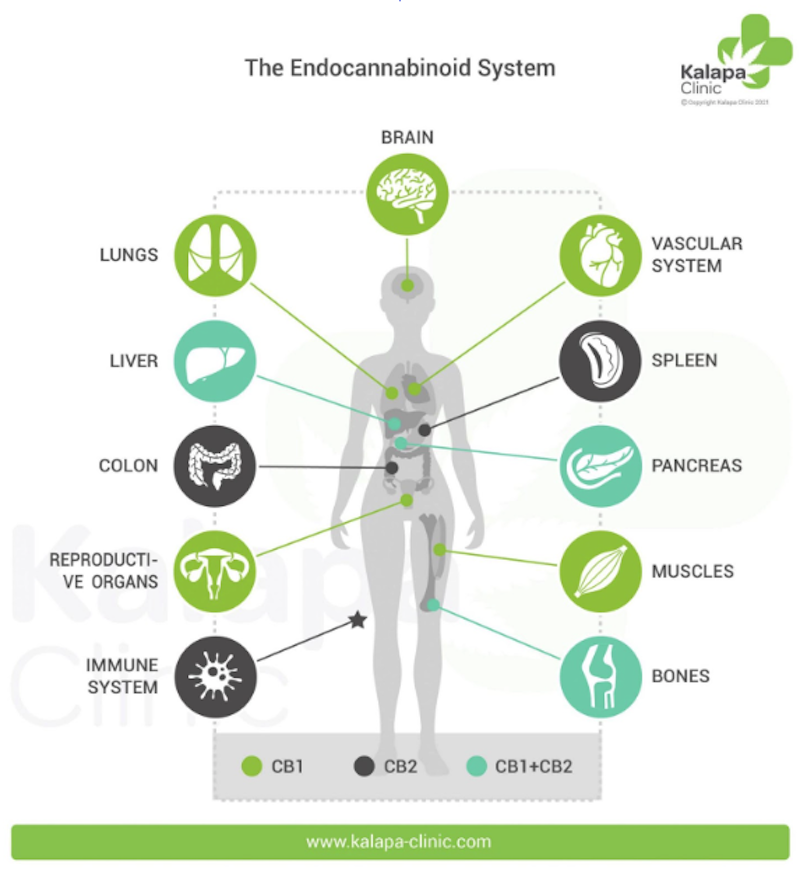
Image credit: Kalapa Clinic.
5. Do not pass go, do not get too high!
Unlike THC, CBD doesn’t make you “high” and typically doesn’t cause any negative side effects. Although experts aren’t completely sure just how CBD interacts with the ECS, they do know that it doesn’t bind to receptors in the human body the same way that THC does.
Photo credit: Joshua Hoehne.
Instead, many experts believe CBD works by preventing other cannibinoids from being broken down in the body.
This allows those cannabinoids (like THC, for example) to have more of an effect on your body.
Additionally, medical research on cannabis suggests that CBD can help with pain, nausea, and other symptoms associated with multiple conditions.
Where can I find Products with CBD?
Whether you’re shopping online or in Redmond, we’re here to help you find what you need, when you need it. That includes cannabis products with CBD!
Click on our online menu link below to see our current availability.
FAQ CBD Facts
What is CBD?
CBD (cannabidiol) is one of the two most abundant compounds in the cannabis plant. Unlike THC, it's non-psychoactive — meaning it won't get you high — but it interacts with your body's Endocannabinoid System to produce a range of beneficial effects.
When was CBD discovered?
CBD was first isolated in 1964 by Dr. Raphael Mechoulam and his team at Hebrew University in Israel — the same landmark study that also identified THC for the first time.
Does CBD get you high?
No. CBD does not bind to cannabinoid receptors the same way THC does, which is why it doesn't produce intoxicating effects. Many experts believe CBD works partly by preventing other cannabinoids from breaking down too quickly in the body.
How do THC and CBD work together?
THC and CBD have a synergistic relationship. CBD can influence how THC affects you — for example, it may help reduce THC-induced anxiety. The effects of both cannabinoids also change with dosage: CBD can be energizing at low doses and sedating at higher doses.
Can CBD help reduce alcohol cravings?
Observational and anecdotal evidence suggests CBD may address some reasons people drink, including anxiety, insomnia, and pain. Rodent studies have shown that low-dose CBD can reduce alcohol-seeking behavior, though more human research is needed.
What is the Endocannabinoid System (ECS)?
The ECS is the largest receptor system in the human body and the body's master regulator of homeostasis. Discovered in 1988 by Dr. Allyn Howlett, it's the network that cannabinoids like CBD and THC interact with to produce their effects.
Want to learn more about CBD and cannabinoids?
Then check out our collection of related posts here!