
Cannabis Science & Plant Biology
Cannabis Science & Plant Biology — Hashtag Cannabis Redmond
Cannabis is a remarkably complex plant.
What looks like a simple jar of flower on our Redmond dispensary shelves is actually the product of extraordinary biological complexity — dozens of cannabinoids, hundreds of terpenes, and thousands of years of selective cultivation all working together to produce an experience unlike anything else in the plant kingdom.
Understanding the science behind cannabis doesn't just satisfy curiosity — it makes you a better, more intentional consumer. When you understand what trichomes are and why they matter, you know what to look for when examining flower quality. When you understand how terpenes work, you can predict how a strain will feel before you try it. When you understand why modern cannabis is more potent than it used to be, you can make safer, more satisfying dosing decisions.
At Hashtag Cannabis in Redmond, we believe the science behind cannabis is as interesting as the experience. This page is your complete cannabis science resource — covering everything from plant biology and trichome production through terpene chemistry, potency science, genetics, cultivation, and beyond.

Understanding the Cannabis Plant
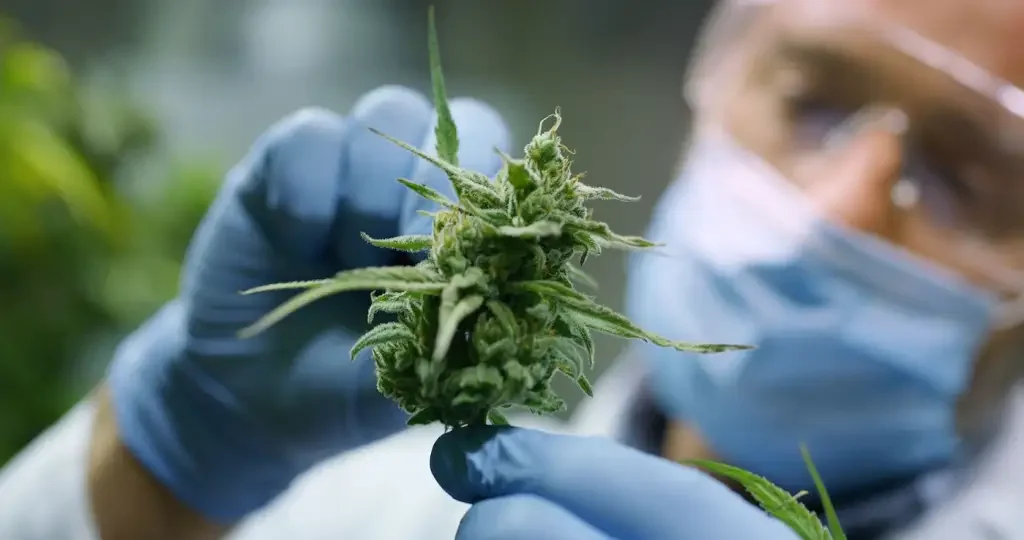
Cannabis is a flowering plant in the Cannabaceae family. It produces a remarkable array of chemical compounds — cannabinoids, terpenes, flavonoids, and other plant compounds — primarily in the dense, resinous structures called trichomes that coat the surface of its flowers.
Trichomes are the tiny, crystal-like structures that give quality cannabis its characteristic frosty appearance and sticky texture. They're essentially the plant's chemical factory — producing and storing cannabinoids like THC and CBD, terpenes that create distinctive aromas and flavors, and other compounds that collectively produce what researchers call the entourage effect. The density and health of a plant's trichomes is one of the most reliable indicators of quality.
Cannabinoids are the active chemical compounds produced by the plant. THC (tetrahydrocannabinol) is the primary psychoactive compound. CBD (cannabidiol) is the most well-known non-intoxicating compound. CBG (cannabigerol) is the precursor from which most other cannabinoids are derived. CBN, CBC, THCv, and dozens of other minor cannabinoids each have their own distinct properties and effects.
Terpenes are the aromatic compounds responsible for each strain's distinctive smell and flavor — and they do far more than just smell good. Research increasingly suggests that terpenes interact with cannabinoids to shape the character and quality of the cannabis experience. Myrcene, limonene, caryophyllene, pinene, and linalool are among the most commonly found and studied cannabis terpenes.
For a deep dive into trichomes: What Makes Cannabis Flower Sticky? Understanding Trichomes & Resin Production
For a deep dive into The Entourage Effect: The Entourage Effect Explained: Why Cannabis Compounds Work Better Together
For a deep dive into terpenes: Cannabis Terpenes & Your Experience: Myrcene, Limonene & More
Our Complete Cannabis Science & Plant Biology Library
Plant Biology & Cultivation
What Makes Cannabis Flower Sticky? Understanding Trichomes & Resin Production
Does Cannabis Expire? Everything You Need To Know About Preserving Marijuana Products
Does Packaging Matter? How Containers Affect Potency & Freshness
Cannabis “Cola” vs. “Bud” vs. “Nug” - What’s The Difference?
Terpenes & Cannabinoids
Cannabis Terpenes & Your Experience: Myrcene, Limonene & More
What Are Minor Cannabinoids? A Guide to CBG, CBC, THCv & More
The Entourage Effect Explained: Why Cannabis Compounds Work Better Together
Why Do Some Strains Make You Sleepy While Others Energize You?
Terpenes 101
Potency, Genetics & Consistency
Consistency & Cannabis: Is It Really Stronger Than It Used To Be?
Cannabis & Genetics: Why Don't They Make 'Em Like They Used To?
Landrace Strains 101: What They Are and Why They Matter Today
Concentrates & Extraction Science
Frequently Asked Questions About Cannabis Science
What are trichomes and why do they matter?
Trichomes are the tiny crystalline structures that cover the surface of cannabis flowers, giving quality flower its characteristic frosty appearance and sticky texture. They are essentially the plant's chemical production facility — synthesizing and storing cannabinoids like THC and CBD, terpenes responsible for aroma and flavor, and other beneficial plant compounds. The density, health, and preservation of trichomes is one of the most reliable indicators of cannabis quality. This is why hand-trimming is preferred over machine-trimming by premium producers — machine trimming damages trichomes and reduces the potency and flavor of the finished flower.
What are terpenes and how do they affect the cannabis experience?
Terpenes are the aromatic compounds found in cannabis — and in thousands of other plants — responsible for each strain's distinctive smell and flavor. But their role extends well beyond aroma. Research increasingly suggests that terpenes interact directly with cannabinoids to shape the quality and character of the cannabis experience in a phenomenon known as the entourage effect. Myrcene is the most common cannabis terpene and is associated with earthy, relaxing effects. Limonene produces bright citrusy uplift. Caryophyllene adds spicy warmth and uniquely also binds to cannabinoid receptors. Pinene produces sharp, focused alertness. Understanding your terpene preferences gives you a far more reliable framework for choosing strains than indica or sativa labels alone.
Why is modern cannabis so much stronger than it used to be?
Several factors have driven significant potency increases in cannabis over the past two decades. Selective breeding specifically targeting higher THC expression has pushed average flower THC well above the low-to-mid teens common in the early 2010s — many strains now regularly test above 25% to 30% THC. Legal market competition created commercial pressure to produce consistently potent, visually appealing flower at scale, driving massive investment in genetics, lighting technology, and cultivation science. New consumption formats like vapes, dabs, and concentrates also deliver cannabinoids more efficiently than traditional smoking. The result is a cannabis landscape that is genuinely more potent than it was a decade ago — which is why starting low and going slow matters more than ever.
What is the endocannabinoid system and how does cannabis interact with it?
The endocannabinoid system (ECS) is a biological signaling network found in humans and all mammals that plays a role in regulating mood, sleep, pain, appetite, memory, and immune function. It consists of cannabinoid receptors (primarily CB1 and CB2), endocannabinoids produced naturally by the body, and enzymes that synthesize and break them down. Cannabis works by introducing plant-derived cannabinoids — primarily THC and CBD — that interact with this existing system. THC binds directly to CB1 receptors in the brain producing psychoactive effects. CBD works more indirectly, modulating the system without binding directly to receptors. The endocannabinoid system is why cannabis produces such a wide range of effects across so many body systems.
Why does cannabis make you hungry — the munchies?
The munchies are a direct result of THC's interaction with the endocannabinoid system. THC activates CB1 receptors in the hypothalamus — the brain region that regulates appetite — triggering the release of appetite-stimulating hormones and increasing sensitivity to food aromas and flavors. THC also activates the brain's reward circuitry in ways that make eating feel more pleasurable. Interestingly research has shown that THC can even make you hungry when you've recently eaten and shouldn't be. This appetite-stimulating effect is one of the most therapeutically significant properties of THC for medical cannabis patients managing conditions that cause appetite loss or wasting.
What is the entourage effect?
The entourage effect is the theory — supported by growing scientific evidence — that cannabinoids, terpenes, and other compounds found in cannabis work better together than in isolation. A full-spectrum product like RSO or whole-plant flower that preserves the complete plant profile is believed to produce a richer, more therapeutically nuanced experience than an isolated compound like pure THC distillate or CBD isolate. The interactions between THC, CBD, minor cannabinoids like CBG and CBN, and terpenes like myrcene and caryophyllene appear to amplify and modulate each other's effects in ways that single compounds cannot replicate. The entourage effect is one of the primary scientific arguments for choosing full-spectrum cannabis products over highly refined isolates.