
How Tolerance Works: Why Some People Need More (or Less) THC Over Time
By Jeff Eckenrode
Image credit: LexScope
Quick Answer: Cannabis tolerance develops because CB1 receptors — the brain's primary binding sites for THC — reduce in number and sensitivity with repeated exposure. The more consistently you use THC, the less responsive those receptors become, and the more you need to feel the same effect. The good news: tolerance is reversible. Even a short break resets sensitivity significantly.
Have you ever noticed that the same product hits differently depending on how often you've been using it?
That's not in your head. It's receptor biology — and once you understand how it works, you can actually use that knowledge to get more out of your cannabis over time, not less.
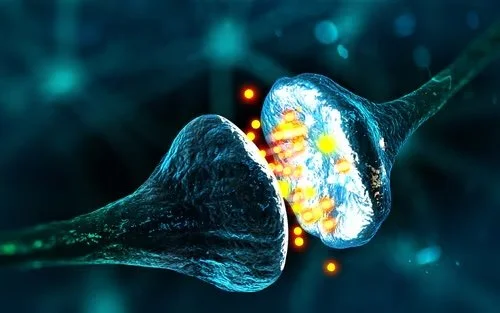
Image credit: Thermo Fisher Scientific
It Starts with CB1 Receptors
THC produces its effects by binding to cannabinoid type 1 receptors — CB1 receptors — distributed throughout the brain and nervous system.
When THC lands on a CB1 receptor, it triggers the chain of effects you associate with being high: euphoria, altered perception, relaxed muscles, changes in memory and appetite.
Here's the thing: your brain is always trying to stay in balance.
When THC repeatedly activates CB1 receptors, the brain responds by reducing both the number of available receptors and their sensitivity to activation. This is called downregulation — the brain's homeostatic response to what it interprets as excessive stimulation.
The result? The same dose produces a weaker effect. You need more to get where you used to go with less.

Image credit: Dan Dimmock
What the Research Shows
This isn't just anecdotal. A landmark human study used PET brain imaging to directly measure CB1 receptor density in chronic daily cannabis users compared to non-users.
The findings were clear: chronic cannabis use caused significant, regionally selective downregulation of CB1 receptors in the brain — particularly in cortical regions like the hippocampus and cerebellum. The degree of downregulation correlated with years of cannabis use.
The more you've used, and the longer you've used it, the more pronounced the effect.
Importantly, the same study found that downregulation is reversible. After approximately four weeks of monitored abstinence, CB1 receptor density returned to normal levels in study participants.
That's the scientific basis for the tolerance break — it actually works, and the timeline is meaningful.

Image credit: Dimitri Bong
Why Some People Have Higher Tolerance Than Others
Not everyone builds tolerance at the same rate, and individual variation here is real.
A few factors that influence how quickly and how severely tolerance develops:
Frequency of use. Daily use builds tolerance far faster than occasional use. Someone who uses cannabis twice a week will maintain significantly more sensitivity than someone using three times a day at identical doses.
Dose. Higher doses produce more rapid receptor downregulation than lower doses. This is part of why starting low and using the minimum effective dose is practical advice, not just caution — it preserves sensitivity over time.
Genetics. Individual differences in CB1 receptor density, endocannabinoid system baseline activity, and metabolic rate for THC all influence tolerance development. Some people simply have more or fewer CB1 receptors to begin with, which affects both how sensitive they are to THC and how quickly tolerance builds.
Consumption method. Inhalation delivers THC to the brain faster and in higher peak concentrations than edibles or tinctures at equivalent doses. Faster, higher-peak delivery tends to drive more rapid tolerance development.
Sex. Research in both animal models and humans has identified sex differences in cannabinoid tolerance. Some evidence suggests females may develop tolerance differently and more rapidly than males, though this is an active area of research and the picture is still developing.
Image credit: Glen Carrie
Why Some People Seem to Need Almost Nothing
On the flip side — why do some people feel effects from a single 2.5mg gummy while others barely notice 25mg?
A few explanations:
Naive or infrequent users have fully sensitive CB1 receptors with no downregulation. The same dose hits a fully responsive system rather than a partially desensitized one. This is why cannabis can feel overwhelming to someone trying it for the first time who happens to take a larger dose.
Endocannabinoid system baseline. Some people naturally produce more or fewer endocannabinoids than others. Those with lower baseline endocannabinoid tone may be more sensitive to exogenous THC's effects.
Genetic CB1 receptor variation. Variations in the CNR1 gene — which encodes the CB1 receptor — influence receptor density and binding affinity. People with naturally higher receptor density may be more sensitive to THC's effects even without prior use.
Image credit: Thought Catalog
How to Manage Tolerance Practically
Take a break. Even a short one. Research confirms that CB1 receptor density recovers with abstinence. Many regular users find that two to seven days without THC meaningfully restores sensitivity — enough to return to lower doses with noticeable effect. Four weeks appears to be the window for full receptor density recovery based on the PET imaging research.
Use the lowest effective dose. This is the single best preventive measure. The less THC you use to achieve your desired effect, the slower your tolerance builds. It also means you have more room to adjust upward when needed.
Rotate consumption methods. Shifting between inhalation, sublingual, and edible routes changes how peak THC concentrations hit the brain — which can modestly slow the rate of receptor adaptation compared to using the same method repeatedly at the same dose.
Consider CBD's role. CBD may partially buffer tolerance development. It acts as a negative allosteric modulator of CB1 receptors — meaning it doesn't produce the same receptor downregulation as THC and may slightly counteract some of the desensitization process. Using products with a CBD component rather than THC alone may support slower tolerance accumulation over time, though this hasn't been directly tested in long-term human clinical trials.
Reset expectations after a break. Coming back to cannabis after a tolerance break means your sensitivity is significantly higher. Start much lower than your pre-break dose — the 2.5 to 5mg starting rule applies here just as much as it does to new users.

Image credit: Thomas John
Tolerance Isn't a Failure
It's easy to interpret tolerance as something going wrong. It isn't.
Tolerance is your brain doing exactly what it's designed to do — adapting to its chemical environment and trying to maintain baseline function. It's a sign of a responsive, healthy system.
What tolerance does mean is that more THC isn't always the answer. In many cases, the better move is a reset — giving your CB1 receptors the space to recover their sensitivity before going back to what was working before.

Where Can I Find the Right Products for Your Tolerance Level in Redmond?
At Hashtag Redmond we’re proud to carry cannabis for everyone. That includes products for every tolerance level, from first-timer to seasoned pro.
Want to see what’s currently stock? Shop our wide range of brands and products by clicking our online menu below.
Frequently Asked Questions About Cannabis Tolerance
Why does cannabis affect me less the more I use it?
Because your brain adapts. THC produces its effects by binding to CB1 receptors throughout the brain. With repeated exposure, the brain responds by reducing both the number of available CB1 receptors and their sensitivity — a process called downregulation. The result is that the same dose triggers a weaker response than it did before. This is well-documented in human research using PET brain imaging, which has directly measured CB1 receptor density reductions in chronic cannabis users compared to non-users.
How long does it take to build cannabis tolerance?
It varies significantly based on frequency of use and dose. Daily heavy use can produce noticeable tolerance within days to weeks. Occasional use — a few times per week at modest doses — may develop tolerance much more slowly or not at all at stable doses. The rate also depends on individual genetics, consumption method, and baseline endocannabinoid system sensitivity. Higher doses and faster-onset delivery methods (inhalation versus edibles) tend to drive more rapid tolerance development.
Does a tolerance break actually work?
Yes — and the science is clear on this. A human PET imaging study directly measured CB1 receptor density in chronic cannabis users before and after a monitored period of abstinence. After approximately four weeks without cannabis, CB1 receptor density returned to normal levels. Many regular users report meaningful sensitivity recovery after even shorter breaks of two to seven days. A full four-week break appears to restore baseline receptor density based on the available research.
Why do some people feel strong effects from very small doses?
Primarily because they have fully sensitive, non-downregulated CB1 receptors. Naive or infrequent users haven't accumulated the receptor desensitization that comes with regular use — so THC lands on a fully responsive system. Individual genetic variation in CB1 receptor density and baseline endocannabinoid tone also plays a role. Some people naturally have more CB1 receptors or more active endocannabinoid systems, which makes them more sensitive to THC's effects regardless of use history.
Is it possible to permanently damage your tolerance?
No. The research is clear that CB1 receptor downregulation is reversible. The PET imaging study that directly measured receptor density in humans found full recovery to normal levels after approximately four weeks of abstinence. What varies is how quickly recovery happens — it appears to be faster in some brain regions than others, and may take longer in people with very long histories of heavy use. But the system does recover, and sensitivity does return.
Does CBD help with tolerance?
Possibly — though the direct clinical evidence in humans is still limited. CBD acts as a negative allosteric modulator of CB1 receptors, meaning it interacts with the receptor differently than THC and doesn't drive the same downregulation. Some researchers suggest that CBD's presence may slow tolerance development compared to THC-only products, partly because it doesn't directly activate CB1 in the same way. Using products with a CBD component is a reasonable strategy for managing tolerance, though it isn't a guarantee and hasn't been tested in long-term human clinical trials specifically designed to answer this question.
Want to learn more about THC Education?
Then check out our collection of related posts here!
For more on THC Education, visit our full resource hub here: THC