
Why Some Edibles Cause Anxiety & How to Avoid It
By Jeff Eckenrode
Image credit: Ferks Guare
Quick Answer: Edibles cause anxiety primarily because of dose — too much THC, absorbed more intensely through first-pass metabolism, overwhelms the brain's CB1 receptors and triggers an anxious response. The fix is almost always lower doses, slower timing, and choosing products with CBD present to counteract THC's anxiogenic effects at higher concentrations. Set and setting matter too.
If you've ever had a bad time with an edible, you probably don't need convincing that they can cause anxiety. What you might not know is exactly why — and more importantly, what you can do to make sure it doesn't happen again.
The anxiety that sometimes follows an edible isn't random. It's predictable, it has a clear mechanism, and it's almost entirely preventable once you understand what's driving it. Here's the full story.

Image credit: Uday Mittal
The Biphasic Nature of THC and Anxiety
THC's relationship with anxiety is dose-dependent — and that's the core of the problem.
At low to moderate doses, THC tends to produce the effects most people associate with pleasant cannabis use: relaxation, mild euphoria, heightened sensory experience, sociability. At higher doses, the same compound can flip into producing the opposite: racing thoughts, heightened heart rate, paranoia, and acute anxiety.
This is what researchers call a biphasic dose-response relationship — the same substance producing qualitatively different, and sometimes opposite, effects depending on the amount consumed. Peer-reviewed research directly documents that THC has anxiolytic (anxiety-reducing) effects at lower doses and anxiogenic (anxiety-producing) effects at higher doses, with the shift occurring at different thresholds for different individuals.
The reason edibles are particularly prone to triggering this high-dose anxious response comes down to two things: first-pass metabolism and delayed onset.
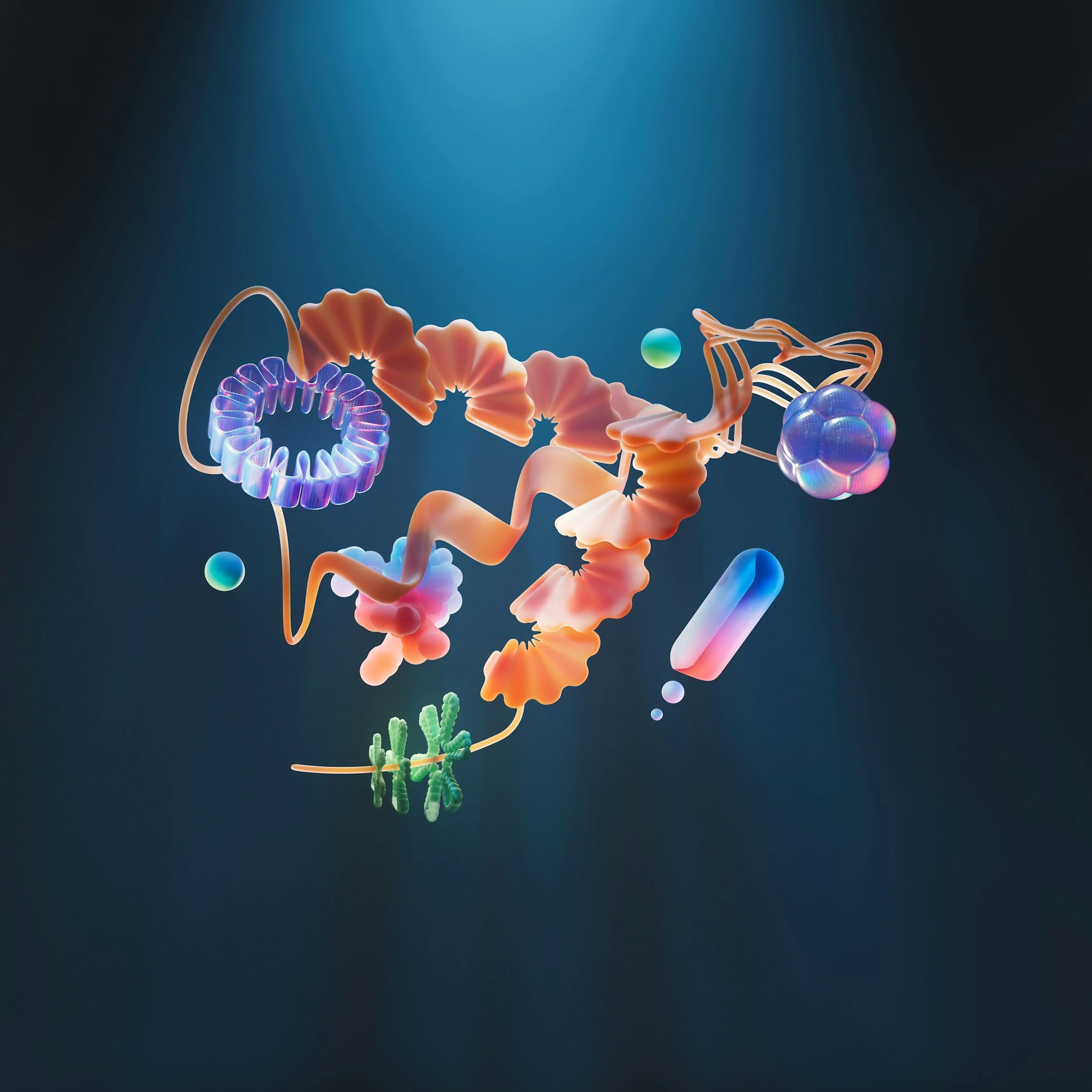
Image credit: Google DeepMind
Why Edibles Hit Differently (And Harder)
When you consume a cannabis edible, the THC travels through your digestive system and is processed by the liver before entering your bloodstream. As we've covered in our edibles deep-dive posts, this first-pass metabolism converts delta-9 THC into 11-hydroxy-THC (11-OH-THC) — an active metabolite that crosses the blood-brain barrier more efficiently than THC itself and produces a deeper, more intense, and longer-lasting experience.
This metabolic transformation is part of why edibles feel qualitatively different from inhaled cannabis. It's also why edible-induced anxiety can feel more overwhelming than anxiety from other consumption methods: you're not just getting THC, you're getting 11-OH-THC, and you're getting more of both than the labeled dose might suggest to someone accustomed to inhaled cannabis.
The delayed onset compounds the problem significantly. When effects don't appear within 30 to 45 minutes, many people conclude the edible isn't working and take more. By the time the first dose kicks in — often between 60 and 90 minutes after consumption — the second dose is already in transit. The result is a dose far higher than intended, arriving at a time when there's no way to reverse course.
Image credit: CRYSTALWEED cannabis
How CBD Changes the Equation
One of the most well-documented findings in cannabinoid research is that CBD can counteract some of THC's anxiogenic effects.
Peer-reviewed research has confirmed that CBD acts as a negative allosteric modulator of CB1 receptors — meaning it changes the shape of the receptor in a way that reduces THC's ability to trigger an anxious response. This is the mechanism behind why many experienced cannabis consumers, and an increasing number of cannabis brands, favor products with meaningful CBD ratios rather than THC-only formulations.
The practical implication is straightforward: products with a significant CBD presence alongside THC are less likely to produce anxiety, particularly at moderate doses, than high-THC-only products. This doesn't mean CBD eliminates the anxiety risk entirely — very high doses of THC can still produce anxious responses even with CBD present. But the buffer is real and documented.
Products with a 1:1 THC to CBD ratio are a commonly recommended starting point for anxiety-prone consumers or those new to edibles. Some consumers do well with 2:1 or even higher CBD ratios, particularly if they're sensitive to THC's psychoactive effects.
Image credit: Elsa Olofsson
Other Factors That Contribute to Edible Anxiety
Individual sensitivity. THC sensitivity varies significantly between people. Body composition, baseline endocannabinoid tone, genetic factors affecting cannabinoid receptor density, and previous cannabis experience all influence how an individual responds to a given dose. What feels like a gentle microdose for one person may be uncomfortably intense for another at the same body weight.
Set and setting. The psychological and environmental context you're in when an edible kicks in matters more than most people realize. Starting in a stressful environment, with social anxiety already elevated, or in an unfamiliar setting significantly increases the likelihood that a cannabis high will trend toward anxiety rather than relaxation. Choosing a comfortable, familiar, low-pressure environment — especially for higher doses or new products — is not a minor consideration.
Empty stomach. Taking an edible on an empty stomach speeds and intensifies absorption, which can push even a moderate dose into territory that feels uncomfortably strong. Eating a light meal before or alongside an edible moderates the onset curve meaningfully.
Terpene profile. Strains and products with high myrcene and linalool content are associated with more relaxing, calming effects. Products dominant in stimulating terpenes like limonene and terpinolene, at higher doses, may be more likely to produce a racy, anxious high. Paying attention to terpene profiles when selecting an edible product is a genuinely useful factor.
Image credit: Elsa Olofsson
How to Avoid Edible Anxiety: A Practical Checklist
Dose lower than you think you need. 2.5 to 5mg THC is the appropriate starting point for most first-time or anxiety-prone edible users. If you've had bad experiences with edibles before, starting at 2.5mg is not being overly cautious — it's being smart.
Wait the full onset window before redosing. Two hours minimum from your first dose before considering a second. The most common cause of edible anxiety is taking more before the first dose has fully arrived.
Choose products with CBD. A meaningful CBD presence counteracts some of THC's anxiogenic effects at the receptor level. Look for products with at least a 1:1 THC:CBD ratio if anxiety is a concern.
Set up your environment intentionally. Eat before dosing. Be in a comfortable, familiar place. Have water and a snack available. Choose a low-obligation window of time where you don't need to be anywhere or do anything stressful.
Know what to do if anxiety hits anyway. If you find yourself in an anxious state after an edible, the most important thing to know is that it will pass. The effects are not permanent. Find a comfortable spot, breathe slowly, drink water, eat something if you haven't, and remind yourself that what you're feeling is a temporary physiological response. CBD, if available, can sometimes take the edge off. Time is the primary remedy.
Where Can I Find Low-Anxiety Edible Options in Redmond?
At Hashtag Cannabis in Redmond, Pioneer Squares by Craft Elixirs is the edible brand for people who want to know exactly what they're eating — and exactly how much.

What Makes Pioneer Squares Special?
Pioneer Squares combines culinary craft with cannabis done right. That means real fruit in every piece, house-made candied peels in the citrus flavors, and an obsessive attention to ingredients that makes them stand out in a category full of artificial shortcuts.
Their cannabis extraction is in-house and small-batch, using certified Kosher, organic sugar cane alcohol to produce a full-spectrum oil rich in natural cannabinoids and terpenes. The oil gets incorporated into the candy mixture before molding — which means the distribution is even throughout every piece. You can cut a Pioneer Square in half and get a consistent dose every time, which matters a lot when you're calibrating carefully.
The fruit chews are pectin-based, vegan, gluten-free, Kosher-certified, and made without artificial additives. Flavors like Black & Blueberry, Sour Cherry, and Key Lime Pie are available with THC, CBD, and CBG options — giving anxiety-prone consumers real flexibility to find the ratio that works for them.
If you've had a rough edible experience and you're ready to try again with more intention, Pioneer Squares give you the control to do it right.
Want to learn more? Visit their website at: https://www.pioneersquares.com
Want to see what's currently in stock? Shop Pioneer Squares products by clicking our online menu below.
Frequently Asked Questions About Edibles and Anxiety
Why do edibles cause more anxiety than smoking or vaping?
Edibles produce a more intense and longer-lasting experience than inhaled cannabis because THC is converted to 11-hydroxy-THC (11-OH-THC) through first-pass liver metabolism — a metabolite that crosses the blood-brain barrier more efficiently than delta-9 THC itself. This means the total psychoactive effect per milligram of THC is greater from an edible than from an inhaled equivalent dose. The delayed onset also leads many people to redose before the first dose arrives, resulting in a combined dose far higher than intended and significantly increasing the likelihood of an anxious response.
What is the biphasic effect of THC and why does it cause anxiety?
THC has a biphasic dose-response relationship with anxiety — meaning it produces qualitatively different effects at low versus high doses. At lower doses, THC tends to be relaxing and mildly euphoric. At higher doses, the same compound can flip into producing the opposite: racing thoughts, elevated heart rate, paranoia, and acute anxiety. This shift occurs because high-dose THC overstimulates CB1 receptors in regions of the brain associated with fear and stress response. The threshold where this flip happens varies by individual, which is why dose calibration is so important.
Does CBD help prevent edible anxiety?
Yes — meaningfully. CBD acts as a negative allosteric modulator of CB1 receptors, changing the receptor's shape in a way that reduces THC's ability to trigger an anxious response. Products with a meaningful CBD presence alongside THC are less likely to produce anxiety than high-THC-only products at moderate doses. A 1:1 THC:CBD ratio is a commonly recommended starting point for anxiety-prone consumers. CBD doesn't eliminate the anxiety risk at very high doses, but the protective effect is real and well-documented in peer-reviewed research.
How long should I wait before taking a second edible dose?
At least two hours from your first dose — and ideally longer if you have not yet felt clear effects. The most common cause of edible anxiety is taking a second dose before the first has fully kicked in, resulting in a combined dose far higher than intended. Traditional edibles can take anywhere from 45 minutes to 2 hours to produce noticeable effects, and that window varies based on your metabolism, body composition, and what you've eaten. Patience is the single most effective tool for preventing an edible experience from becoming overwhelming.
What should I do if I feel anxious after taking an edible?
Find a comfortable, familiar spot and remind yourself that what you're feeling is temporary and will pass. Drink water, eat a light snack if you haven't, and breathe slowly. If CBD is available — as a tincture, capsule, or other format — taking it may help take the edge off by counteracting some of THC's anxiogenic effects at the receptor level. Avoid situations that increase stress, like crowds, unfamiliar environments, or high-stakes conversations. The effects of an edible, even an uncomfortable one, will diminish over several hours. Time is the primary remedy.
What dose of THC in edibles is safe for anxiety-prone people?
Start at 2.5 to 5mg THC for any edible product, especially if you have a history of anxiety with cannabis or are new to edibles. This is not an excessively cautious recommendation — it's the appropriate starting point that allows you to calibrate your sensitivity without overshooting into uncomfortable territory. If 5mg produces no anxiety and effects feel manageable, you can increase incrementally at future sessions. Many anxiety-prone consumers find 5 to 10mg to be their comfortable range with no need to go higher.
Want to learn more about Edibles & Dosing?
Then check out our collection of related posts here!
For more posts on Edibles & Dosing, visit our full resource hub here: Edibles & Dosing