
Cannabis for Stress Relief: Best Strains, Products & Practical Tips
By Jeff Eckenrode
Image credit: Sam Carter
Quick Answer: Cannabis can be effective for stress relief, primarily through the endocannabinoid system's role in regulating the body's stress response. CBD shows the most consistent evidence for reducing anxiety without intoxication. Lower-dose THC in calming terpene profiles can also help, though higher doses reliably worsen anxiety. The key variables are dose, cannabinoid ratio, terpene profile, and choosing the right delivery method for your situation.
Stress is a very common reason people reach for cannabis. Coincidentally, it’s also one of the areas where it's easiest to accidentally make things worse instead of better.
Used thoughtfully, cannabis can genuinely take the edge off a stressful day, quiet a restless mind, and help you transition from high-alert to rest. Used carelessly with the wrong dose, the wrong product, or in the wrong moment, it can amplify exactly what you were trying to quiet.
The difference usually comes down to understanding what's actually happening in your body, and making product decisions that work with that biology rather than against it.
Here's what the science says, and how to put together a practical approach that actually works.

Image credit: Nik Shuliahin
How Cannabis Interacts with the Stress Response
Your body has a built-in system for managing stress: the hypothalamic-pituitary-adrenal (HPA) axis, which regulates the release of cortisol (your primary stress hormone), and the sympathetic nervous system, which governs the fight-or-flight response.
Under normal circumstances, the endocannabinoid system (ECS) helps regulate and buffer both of these — it's essentially part of the body's internal stress-modulation architecture.
Research has documented that the endocannabinoid system plays an important role in homeostatic regulation of anxiety and stress responses.
When the ECS is functioning well, it helps dampen excessive stress activation and supports the return to baseline after stressful events.
Chronic or traumatic stress can disrupt ECS function — which is part of why the system has become an important target for cannabinoid-based therapeutic research.
This is the mechanism behind why cannabis is so commonly used for stress. Cannabinoids like THC and CBD interact with the ECS in ways that can modulate the stress response.
However, they do so through different pathways, with different risk profiles, and at different optimal doses.
Image credit: Esteban López
CBD for Stress: The Most Evidence-Supported Option
CBD has the most consistent evidence for stress relief of any cannabinoid, and the most favorable risk profile for regular use.
The mechanism involves multiple pathways: CBD acts on serotonin receptors, modulates the ECS indirectly by inhibiting the breakdown of the body's own endocannabinoids, and appears to influence the HPA axis's cortisol response.
A clinical study found that CBD attenuated an abnormal cortisol response to acute stress and reduced stress-associated anxiety in participants — a meaningful finding that connects CBD's action to the actual hormonal stress response rather than just subjective feelings of calm.
CBD is non-intoxicating, which makes it appropriate for daytime and functional use in ways that THC isn't. It doesn't impair work, driving, or complex tasks when used at standard doses. F
or people who want the edge taken off without feeling altered, CBD-dominant products are the most practical starting point.
Practical CBD for stress: Sublingual tinctures (10 to 30mg CBD, taken 20 to 40 minutes before a stressful situation or as a daily supplement) are a common and well-tolerated approach. CBD capsules offer the same with slower onset and longer duration. For acute stress, a fast-acting CBD tincture or nano-emulsified product provides the quickest relief without psychoactive effects.
Image credit: GRAV®
THC for Stress: Useful at Low Doses, Counterproductive at High Ones
THC's relationship with stress and anxiety follows the same biphasic pattern we've covered in other posts in this series.
At lower doses, THC can be genuinely relaxing — reducing tension, quieting mental chatter, and promoting a calmer state. At higher doses, the same compound reliably makes anxiety worse rather than better.
This dose-dependency is critical for stress-relief applications. If your goal is stress relief, you are not looking for a strong high. You're looking for just enough THC to activate the ECS's stress-buffering mechanisms without overshooting into the territory where CB1 receptor overstimulation triggers the anxiogenic response.
For most stress-relief purposes, 2.5 to 5mg THC combined with CBD is a more reliable approach than higher THC doses alone.
Products with a 1:1 or higher CBD:THC ratio are particularly well-suited because CBD's negative allosteric modulation of CB1 receptors provides a buffer against THC's anxiogenic potential.
The result? 1:1 products can give you more latitude for stress relief without the anxiety risk.
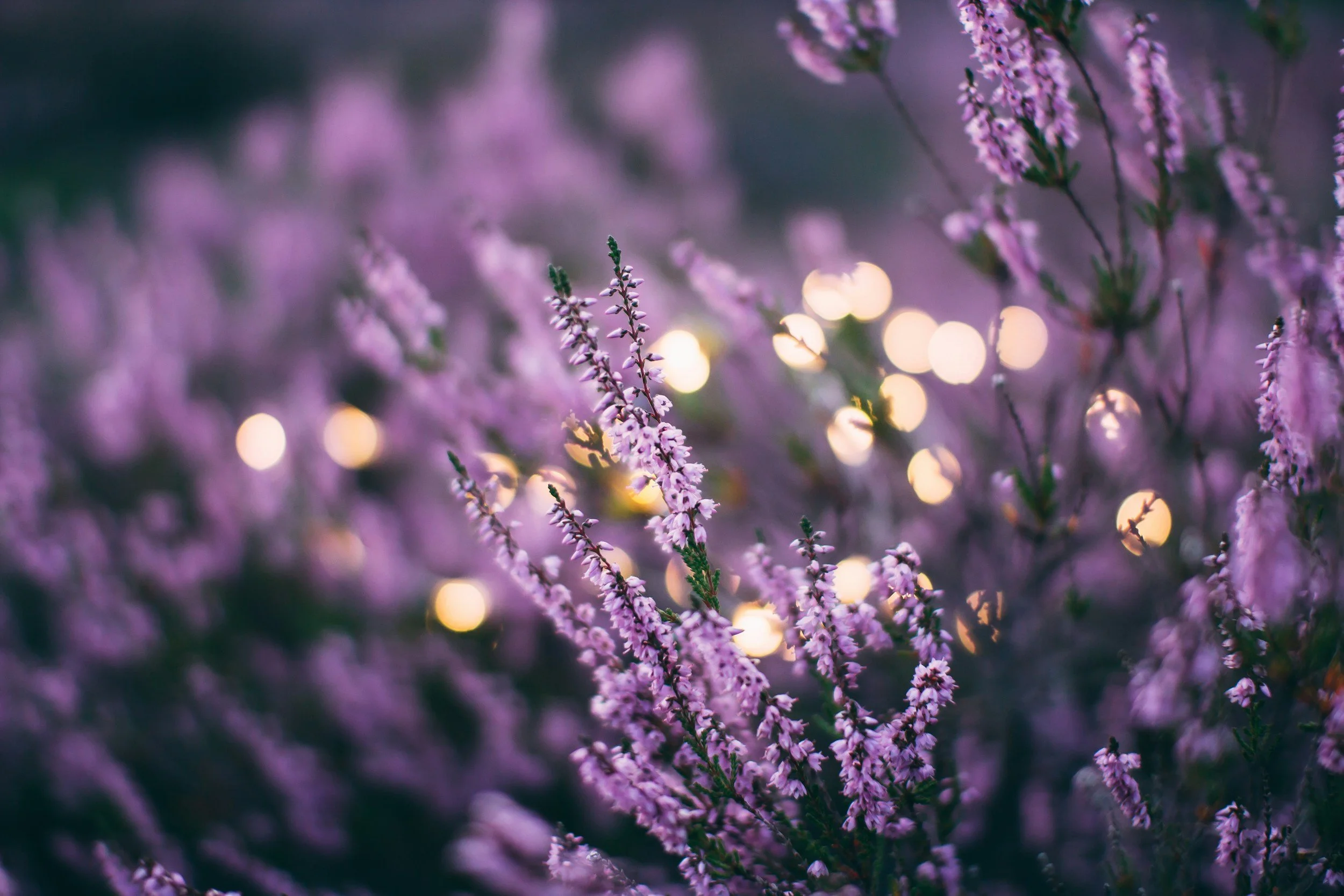
Image credit: Daiga Ellaby
The Terpene Factor
Beyond cannabinoid ratios, terpene profile shapes the character of the stress-relief experience in ways that matter practically.
Several terpenes have documented pharmacological properties relevant to stress and anxiety:
Linalool — the primary terpene in lavender — has documented anxiolytic effects through olfactory pathways and interaction with GABAergic transmission. Strains and products with dominant linalool profiles are among the most consistent choices for stress relief and relaxation.
Myrcene at concentrations above 0.5 percent is associated with sedating and calming effects, making high-myrcene products well-suited to end-of-day stress relief when some sedation is acceptable or desired.
Caryophyllene contributes anti-inflammatory effects through CB2 receptor activation and may add stress-modulating properties through this secondary cannabinoid-like pathway.
Limonene at low doses is associated with mood elevation and alertness — potentially useful for daytime stress relief where you need to remain functional — but at higher doses or in already-anxious states may be too stimulating.
When shopping for stress relief, looking for products with linalool and myrcene as dominant or secondary terpenes is a reasonable starting point.
Avoid products dominated by stimulating terpenes like terpinolene when anxiety is already elevated.
Where Can I Find Stress-Relief Cannabis Products in Redmond?
At Hashtag Cannabis in Redmond, we’re proud to offer products by Mako Farm that are specifically formulated to help you reach and maintain your stress relief goals.
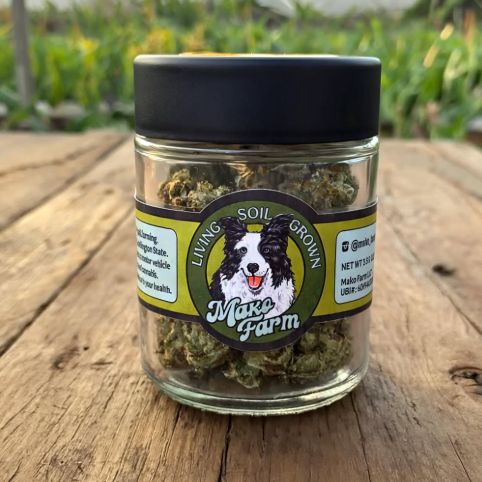
Image credit: Mako Farm
What Makes Mako Farm Special?
Mako Farm grows exceptional craft cannabis with cultivation practices built for sustainability and minimal ecological impact.
That’s why they’ve spent nine years growing exclusively in rich, living soil.
So you can be confident that their exceptional craft cannabis flower meets the highest possible standards for quality and safety.
Looking for a strain to unwind with? Try Mako Farm’s Grease Monkey. It’s sweet and skunky aroma combines effortlessly with a creeping, euphoric high. Making it the perfect choice for unwinding after a long day.
Want to learn more? Follow them on Instagram at: https://www.instagram.com/mako_farm/
Want to see what's currently in stock? Shop Mako Farm products by clicking our online menu below.
Frequently Asked Questions About Cannabis and Stress Relief
Does cannabis actually reduce stress, or does it just mask it?
Both, depending on how it's used. The endocannabinoid system plays a documented role in regulating the body's stress response — including cortisol release and the activity of the hypothalamic-pituitary-adrenal axis — which means cannabinoids can interact with the actual physiological stress response, not just suppress the subjective feeling of it. CBD in particular has shown the ability to attenuate cortisol dysregulation in clinical research. That said, cannabis doesn't resolve the sources of stress — it helps manage the physiological and psychological experience of it. Used intentionally as one tool in a broader approach, it can be genuinely effective. Used as a sole coping mechanism, it's more likely to create dependency than durable relief.
Is CBD or THC better for stress relief?
CBD has the more consistent evidence base and the better risk profile for stress relief, particularly for daytime use. It's non-intoxicating, doesn't impair function, and has documented anxiolytic and cortisol-modulating effects. THC can also be effective at lower doses — reducing tension and quieting mental chatter — but its anxiogenic effects at higher doses make it a less reliable tool for stress management. A combination of CBD with low-dose THC, in a ratio that favors CBD, tends to be the most practically useful approach for most people. Lower THC means lower anxiety risk; CBD's presence further buffers against THC-induced anxiety.
What terpenes are best for stress relief?
Linalool and myrcene are the most consistently associated with calming, stress-relieving effects. Linalool, the primary terpene in lavender, has documented anxiolytic effects and is found in strains like Do-Si-Dos, Zkittlez, and Amnesia Haze. Myrcene at concentrations above 0.5 percent contributes sedating and calming effects — present in many indica-leaning cultivars including OG Kush, Blue Dream, and Granddaddy Purple. Caryophyllene adds anti-inflammatory depth through CB2 receptor activation. When shopping, ask about terpene profiles and look for products where linalool or myrcene are dominant or prominent secondary terpenes.
Can cannabis make stress worse?
Yes — and it does for many people who use too much, choose the wrong product, or use it in the wrong context. High-dose THC reliably produces anxiogenic effects in many users — the same biphasic response that makes low-dose THC relaxing makes high-dose THC anxiety-inducing. Using cannabis when you're already in a highly activated, stressed state can amplify rather than quiet that state, particularly with stimulating terpene profiles or high-THC products. Context, dose, and cannabinoid ratio all matter. If cannabis has made you more anxious in the past, lower your dose significantly, add CBD to the equation, and avoid high-THC products.
How much cannabis should I take for stress relief?
Start conservatively — 2.5 to 5mg THC with meaningful CBD (10 to 20mg) is a reasonable starting point for products that include both. For CBD-only products, 10 to 30mg is a commonly used range for stress and anxiety support, though individual response varies. The goal for stress relief is a subtle reduction in tension and mental noise — not an intense high. If you're feeling strongly impaired, you've likely overdone it, which tends to produce anxiety rather than relieve it. Titrate up slowly over multiple sessions rather than chasing a stronger effect at one sitting.
Can I use cannabis for stress every day?
Daily use is possible but worth approaching thoughtfully. Daily CBD use at moderate doses appears well-tolerated and may support the ECS's regulatory function over time without significant tolerance concerns. Daily THC use leads to tolerance — needing progressively more for the same effect — and can disrupt sleep architecture and mood regulation in ways that ultimately add to rather than subtract from baseline stress. If you're using cannabis daily for stress, periodic tolerance breaks (a few days without THC) help maintain its effectiveness and prevent dependency patterns from forming.
Want to learn more about Cannabis & Wellness?
Then check out our collection of related posts here!
For more posts on Cannabis & Wellness, visit our full resource hub here: Cannabis & Wellness