
A Guide to Fast-Acting Edibles: Nano-Emulsions & New Tech Explained
By Jeff Eckenrode
Image credit: David Clode
Quick Answer: Fast-acting edibles use nanoemulsion technology to break cannabinoids into particles smaller than 200 nanometers, dramatically increasing how quickly and efficiently your body absorbs them. Where traditional edibles can take 1 to 2 hours to kick in, nano-emulsified products typically produce effects within 15 to 30 minutes. The technology works by making oil-based cannabinoids water-compatible and gut-ready from the first moment of absorption.
If you've ever eaten an edible, waited an hour, decided nothing was happening, taken more, and then deeply regretted that decision — you already understand the core problem that fast-acting edible technology is trying to solve.
Traditional edibles are genuinely unpredictable. Not because the dose is imprecise, but because the biology of how your body processes them is variable.
The time it takes to feel effects, the intensity of those effects, and how long they last all vary based on your metabolism, your body composition, what you've eaten that day, and a range of other factors that no label can account for.
But new technologies, including nanoemulsification, are changing that.
Here's what it actually does, why it works, and what to look for when you're shopping.
Image credit: Evie Fjord
Why Traditional Edibles Are Slow and Unpredictable
To understand what fast-acting technology solves, you need to understand what happens after you eat a standard cannabis edible.
When you consume a traditional gummy, chocolate, or baked good infused with cannabis oil, the THC goes through a process called first-pass metabolism. The edible travels through your digestive system, and the THC is absorbed through the gut wall and routed directly to the liver, where it is metabolized before it ever reaches your bloodstream.
In that metabolic process, a large portion of the THC is lost — oral THC bioavailability in traditional edibles is typically only 6 to 12 percent, meaning most of what you consume never reaches your blood in active form. What does get through undergoes a chemical transformation: the liver converts delta-9 THC into 11-hydroxy-THC (11-OH-THC), an active metabolite that crosses the blood-brain barrier more efficiently than THC itself.
Research from the NIH documents that the ratio of 11-OH-THC to THC after oral ingestion is greater than 1:1, compared to less than 1:20 following inhalation. This is a significant shift, and it's part of why edibles often feel qualitatively different from inhaled cannabis — not just slower, but deeper and longer-lasting.
The delay is built into this process. Your digestive system takes time. Gastric emptying, intestinal absorption, liver processing — all of that happens before you feel anything.
Typical onset for traditional edibles is 45 minutes to 2 hours, and that range is genuinely wide because digestion varies so much from person to person and meal to meal.
Image credit: Shrinath
What Nanoemulsification Actually Does
Nanoemulsification is a process that physically transforms cannabis oil into water-compatible particles small enough to be absorbed much faster and more efficiently than standard oil-based formulations.
Here's the basic mechanism: cannabinoids are hydrophobic, meaning they don't mix with water. Traditional edibles use fat or oil as the carrier because that's the medium cannabinoids are soluble in. Your gut, however, is mostly water-based — which creates a compatibility problem that slows absorption.
Nanoemulsification uses high-energy processes (typically high-frequency sound waves called ultrasonication, or high-pressure homogenization) to break cannabis oil into particles well under 200 nanometers in diameter.
These tiny droplets are then coated with surfactants — emulsifying agents that make them compatible with water-based environments. The result is a stable, translucent liquid that disperses evenly through water-based formulations and is readily absorbed by the mucous membranes of the mouth, stomach, and intestinal walls.
The effect on onset time is measurable. Where traditional edibles may take 60 to 90 minutes to produce noticeable effects, nanoemulsified products typically onset within 15 to 30 minutes.
The effect on bioavailability is also significant: a 2023 peer-reviewed study found that nanoemulsion CBD formulations achieved bioavailability levels that exceeded typical oral edible benchmarks by 3 to 4 times within 6 to 24 hours after administration.
A 2025 crossover clinical trial comparing a self-nanoemulsifying THC/CBD powder to standard oil drops directly confirmed improved peak blood concentration and faster absorption in human subjects — adding clinical-level evidence to what the technology's early adopters had already observed empirically.

Image credit: Verdelux
What Products Use This Technology
Cannabis beverages. This is currently the most common application of nanoemulsion technology in the legal market. Infused sparkling waters, tonics, teas, and sodas use nano-emulsified cannabinoids to produce faster onset than gummies or chocolates and a more sessionable experience — effects that arrive within 15 to 30 minutes and fade in 2 to 4 hours rather than lasting 4 to 6 hours or longer.
Fast-acting gummies. A growing number of brands now produce nano-infused gummies alongside traditional oil-based products. These use the same nanoemulsification process applied to a gel or gummy carrier, producing noticeably faster onset than conventional gummies at equivalent doses.
Water-soluble powders and tinctures. Some brands produce water-soluble cannabis powders or tinctures formulated with nanoemulsified cannabinoids, designed to dissolve in any beverage or absorb rapidly under the tongue. These offer flexibility for consumers who want faster onset without purchasing a pre-formulated beverage product.
Image credit: Elsa Olofsson
What Nanoemulsification Doesn't Change
It's worth being clear about what this technology does and doesn't do.
Nanoemulsification speeds onset and improves bioavailability. It does not make edibles risk-free or solve all the unpredictability challenges of oral cannabis consumption.
Individual variation in metabolism still exists. The 11-OH-THC conversion still happens through first-pass metabolism — it just happens faster. And the general principle of starting low and going slow still applies, even with products that onset more quickly.
Some consumers actually prefer traditional edibles precisely because of the slower, longer-lasting, deeper body experience that 11-OH-THC conversion produces.
Fast-acting technology is a better fit for consumers who want more control over timing, a more session-like experience, or the kind of predictability that makes dosing easier.

Where Can I Find Fast-Acting Edibles in Redmond?
At Hashtag Cannabis in Redmond, Verdelux makes it easy to discover flavorful, fast-acting edibles that take your cannabis experience to a new level.
What Makes Verdelux Special?
Verdelux is committed to creating the highest-quality cannabis products in the world.
That’s why they work with some of the best very best cannabis growers in Washington state to produce award-winning, strain-specific confections and topicals.
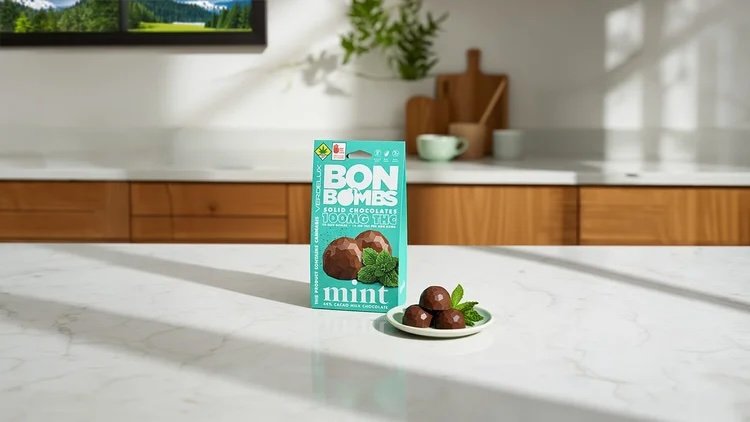
Feeling like a treat? Then elevate your edible experience with Verdelux's widely beloved Bon Bombs. Available in a variety of Dark and Milk Chocolate flavors, Bon Bombs are made with the finest ingredients to offer a unique and delicious cannabis experience.
Searching for truly restful and restorative sleep? Then give Lush Chews a look!
Vegan, gluten-free and available in flavors like Ginger Peach and Sour Blue Raspberry, Lush Chew’s CBD formulations provide a euphoric experience that relaxes the mind and body.
Want to learn more? Visit their website at: https://www.verdelux.com/
Want to see what's currently in stock? Shop Verdelux products by clicking our online menu below.
Frequently Asked Questions About Fast-Acting Edibles and Nanoemulsification
What are fast-acting edibles and how are they different from regular edibles?
Fast-acting edibles use nanoemulsion technology to break cannabinoids into particles under 200 nanometers in diameter and coat them with emulsifying agents that make them water-compatible. This allows the cannabinoids to be absorbed much more quickly through the gut wall and mucous membranes than traditional oil-based edibles. Where standard edibles typically take 45 minutes to 2 hours to produce effects, nano-emulsified products generally onset within 15 to 30 minutes. The overall experience is more predictable, more controllable, and more similar to a sessionable product than a traditional edible.
What is nanoemulsification and how does it work?
Nanoemulsification is a physical process that uses high-energy methods — typically ultrasonication (high-frequency sound waves) or high-pressure homogenization — to break cannabis oil into extremely small particles, well under 200 nanometers. These particles are then coated with surfactants that make them compatible with water-based environments like the gut and bloodstream. The result is a stable, evenly distributed formulation that the body can absorb much more efficiently than standard oil-based cannabis products, which are hydrophobic and don't mix well with the water-based environment of the digestive system.
Why do traditional edibles take so long to kick in?
Traditional edibles are slow because THC must survive the full digestive process before reaching your bloodstream. After you eat a cannabis edible, the THC travels through the stomach and small intestine, gets absorbed through the gut wall, and is routed directly to the liver — where it undergoes first-pass metabolism before entering systemic circulation. Most of the THC is lost or transformed during this process. Oral THC bioavailability is typically only 6 to 12 percent. The remaining active compound must then travel from the liver to the brain, adding more time. The whole process takes 45 minutes to 2 hours depending on your metabolism, food intake, and body composition.
What is 11-OH-THC and why does it matter for edibles?
When the liver processes oral THC, it converts much of it into 11-hydroxy-THC (11-OH-THC), an active metabolite that crosses the blood-brain barrier more efficiently than delta-9 THC. Research shows the ratio of 11-OH-THC to THC after oral ingestion is greater than 1:1, compared to less than 1:20 following inhalation. This is why edibles often feel qualitatively different from inhaled cannabis — the higher concentration of 11-OH-THC produces a deeper, more body-forward, and longer-lasting effect. This conversion still happens with nanoemulsified products — just faster, because absorption begins sooner.
Are fast-acting edibles more potent than regular edibles at the same dose?
Not necessarily more potent in terms of THC percentage, but potentially more efficient. Nanoemulsification increases bioavailability, meaning more of the cannabinoids in the product actually reach your bloodstream in active form. At equal labeled doses, a well-formulated nano product may deliver a more consistent and noticeable effect than a traditional oil-based product, particularly for consumers who have found standard edibles unpredictable or underwhelming. This means dosing guidance is especially important: start low, wait the full onset window, and assess before taking more.
What types of products use nanoemulsion technology?
The most common applications in the legal cannabis market are infused beverages — sparkling waters, tonics, sodas, and teas — which use water-soluble nanoemulsified cannabinoids to produce effects within 15 to 30 minutes. A growing number of brands also produce nano-infused gummies, water-soluble powders, and fast-acting tinctures using the same underlying technology. When shopping, look for terms like "nano-emulsified," "water-soluble," or "fast-acting" on the label, along with a stated onset time claim from the manufacturer.
Want to learn more about Edibles & Dosing?
Then check out our collection of related posts here!
For more posts on Edibles & Dosing, visit our full resource hub here: Edibles & Dosing