
How is Sativa Cannabis Different Than Indica?
By Jeff Eckenrode

Quick Answer: Sativa and Indica cannabis differ in appearance and effects — Sativas are tall with narrow leaves and tend to energize, while Indicas are short and bushy with relaxing, sedative effects. These differences are driven by terpenes, not THC. But here's the twist: true pure Sativas and Indicas no longer exist — almost all modern cannabis is a hybrid!
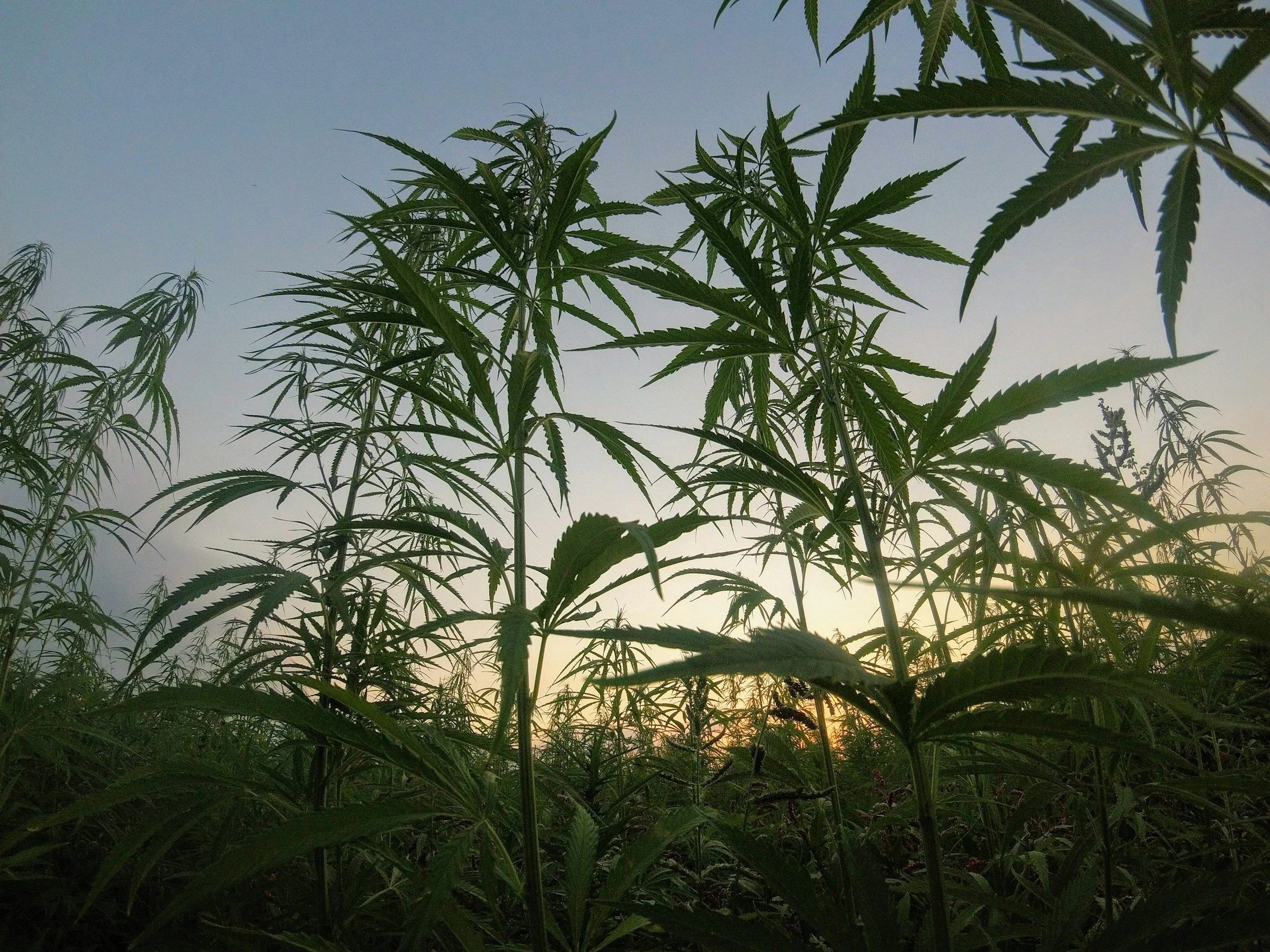
Image credit: Matteo Paganelli
One of the most common questions you might hear when hopping in a cannabis dispensary is: “Sativa or Indica?”
In fact, some dispensaries go as far as organizing their entire stores based on these two types of cannabis. But why is that?
Where did Sativa and Indica come from? And how are they different?
Want to find out? Then you have come to the right place!
Where did cannabis come from?
According to cannabis researchers, the cannabis plant first emerged around 10,000 years ago in the Caucasus Mountains, most likely in current-day Kazakhstan.
Harsh environmental factors like wind and snow, as well as an unforgiving landscape typified by rugged and mountainous terrain, forced early cannabis plants to become hearty and, to a certain extent, inventive, in order to survive.
To grow quickly and reproduce before the short summer season ended, scientists believe that early cannabis plants evolved to tempt animals and birds to gobble up their seeds and then excrete them while migrating.
Humans did their part too, carrying seeds out of Russia through trade along the Silk Road.

How was Cannabis used in the past?
Cannabis was once an essential treatment for the ancient Chinese and the Indian Ayurvedics, as well as the Victorians who adopted it into the Western Pharmacopeia in the mid-1850s. It was even used in Europe and North America as a household tonic until its prohibition in 1937 in the United States.
What types of cannabis are there?
Cannabis, commonly known as marijuana, is a type of flowering plants that belongs to the family Cannabaceae. To date, there are three species of cannabis, Cannabis sativa, Cannabis indica, and Cannabis Ruderalis.
Cannabis Ruderalis is rarely used for recreational purposes. Native to Central and Eastern Europe and Russia, Ruderalis contains a relatively low quantity of THC compared to Indica or Sativa cannabis. That is a major reason why it’s rarely found in dispensaries in the United States.
Where did Indica cannabis come from?
The seeds that moved east into the colder regions of the Himalayas developed into the so-called Indica or Kush strains.
When consumed, the psychoactivity these plants produced tended to be more physical than cerebral, bringing on a sleepy condition (commonly referred to today as “couchlock”).
Where did Sativa cannabis come from?
Seeds that went west to the Middle East and Africa are today commonly called the Sativa varieties.
They mature and flower much more slowly than Indica plants, sometimes up to 6 months! This is due largely because they grow comfortably in warm, humid climates between 0-30 degrees latitude.
When consumed, Sativa cannabis flowers could stimulate talkativeness, nervousness, and rapid-fire bursts of energy or creativity.

How are Sativa cannabis plants different from Indica?
Sativa cannabis plants are sinuous and can reach heights of as much as 20 feet tall!
They have narrow, finger-shaped leaves and airy, less-dense buds that take longer to mature.
Physically speaking, Indica cannabis plants are much shorter and bushier than Sativa plants. They have rounded leaves and produce dense buds that can appear green, purple or any shade in between.
Does Sativa cannabis feel different than Indica?
The highs between Sativa and Indica plants can be very different! But it’s not due to the shape of each plant or the type of THC they produce.
In fact, Sativa and Indica plants produce THC molecules that are identical to one another.
Some research indicates that the aromatic and flavor molecules, or “terpenes”, contribute largely to the different effects of Sativa and Indica cannabis.
Terpenes like limonene (found commonly in lemons), caryophyllene (found commonly in black pepper) and pinene (found commonly in pine trees), which are found in high amounts in Sativa cannabis, may contribute to the energizing effects of many Sativa cannabis strains.
Terpenes like myrcene (found commonly in mangoes) and linalool (found commonly in lavender), which are found in high amounts in Indica cannabis, may be responsible for the relaxing, sedative effects that are commonly associated with Indica cannabis strains.
Where can I find a pure Sativa or a pure Indica?
Today, the terms “sativa” and “indica” are, by and large, meaningless. Why is that?
Because cannabis plants in North America have been hybridized (ie- crossed with one another) for over 60 years!
To date, a “true”, un-hybridized sativa or indica is not known to exist.
So although the terms sativa and indica are unreliable at predicting effects, they are now used commonly in reference to different types of cannabis (known as “strains” or “cultivars”).
Want to learn more about Cannabis?
Then check out our related posts here!
Need help picking out a product? Then ask our friendly bud tenders!
Whether you’re shopping online or in Redmond, we’re here to help you find what you need, when you need it.
FAQ How Is Sativa Cannabis Different Than Indica?
What's the main difference between Sativa and Indica cannabis?
The most commonly discussed differences are in effects and appearance. Sativa plants are tall with narrow, finger-shaped leaves and airy buds — and are often associated with energizing, uplifting, and creative effects. Indica plants are shorter and bushier with dense, rounded buds — and are commonly linked to relaxing, sedating, couch-lock effects. That said, the science behind why they feel different is more nuanced than most people realize — it's largely about terpenes, not plant shape!
Why do Sativa and Indica feel so different if they produce the same THC?
This is one of the most fascinating things about cannabis! Sativa and Indica plants actually produce chemically identical THC molecules — so THC isn't what causes the different effects. Current research points to terpenes as the key differentiator. Sativa strains tend to be rich in energizing terpenes like limonene, caryophyllene, and pinene. Indica strains are often high in relaxing, sedative terpenes like myrcene and linalool. The terpene profile shapes the experience far more than the plant type alone.
Is it true that pure Sativa and Indica strains no longer exist?
Yes — and this surprises a lot of people! Because cannabis plants in North America have been hybridized and crossbred for over 60 years, a true unhybridized Sativa or Indica is not known to exist anymore. Almost every strain you'll encounter at a dispensary today is technically a hybrid. The terms "Sativa" and "Indica" now function more as shorthand for describing the general effect profile — uplifting vs relaxing — rather than as strict botanical categories.
What is a hybrid cannabis strain?
A hybrid is a cannabis plant bred by crossing Sativa and Indica genetics — which, as noted above, describes virtually every modern strain! Hybrids can lean Sativa-dominant (more uplifting), Indica-dominant (more relaxing), or be balanced somewhere in the middle. They allow cultivators to combine the best traits of both types — specific flavors, aromas, potency, and effects — into a single strain. When a budtender asks if you want something energizing or relaxing, they're essentially asking where on the Sativa-to-Indica spectrum you want to be.
Does the shape of a cannabis plant tell you how it will make you feel?
Not reliably! While there are general associations between plant structure and effects, modern hybridization means you can't accurately predict a strain's effect just by looking at whether it has narrow Sativa-style leaves or dense Indica-style buds. The more reliable predictor of how a strain will make you feel is its terpene profile — which is why asking your budtender about the dominant terpenes is one of the best ways to find the right product for your needs.
Which is better for sleep — Sativa or Indica?
Indica strains are traditionally the go-to recommendation for sleep, and for good reason! Their typically higher concentrations of myrcene and linalool — terpenes associated with sedation and relaxation — make them a natural fit for winding down before bed. A balanced 1:1 THC-to-CBD product with an Indica-leaning terpene profile is often considered the ideal combination for both falling asleep and staying asleep. That said, individual responses vary — what works best for sleep is always personal!
Want to learn more about cannabis strains and effects?
Then check out our collection of related posts here!