
The Seating Chart
By Jeff Eckenrode
The line started at the counter and ended somewhere past Marv’s. It was Green Wednesday, the day before Thanksgiving, when half the county remembers it’s about to spend four hours at a table with relatives. Everyone in line had the same look: people who had seen tomorrow coming for weeks and had run out of places to hide.
Pete had a clipboard. He stood by the door in his good flannel, greeting each one like a cousin, writing down how many, where from, first time or not. He’d been looking forward to it since April.
“Forty-one in line,” he called. “We got Texas.”
Somebody near the back raised a hand like they’d won something.
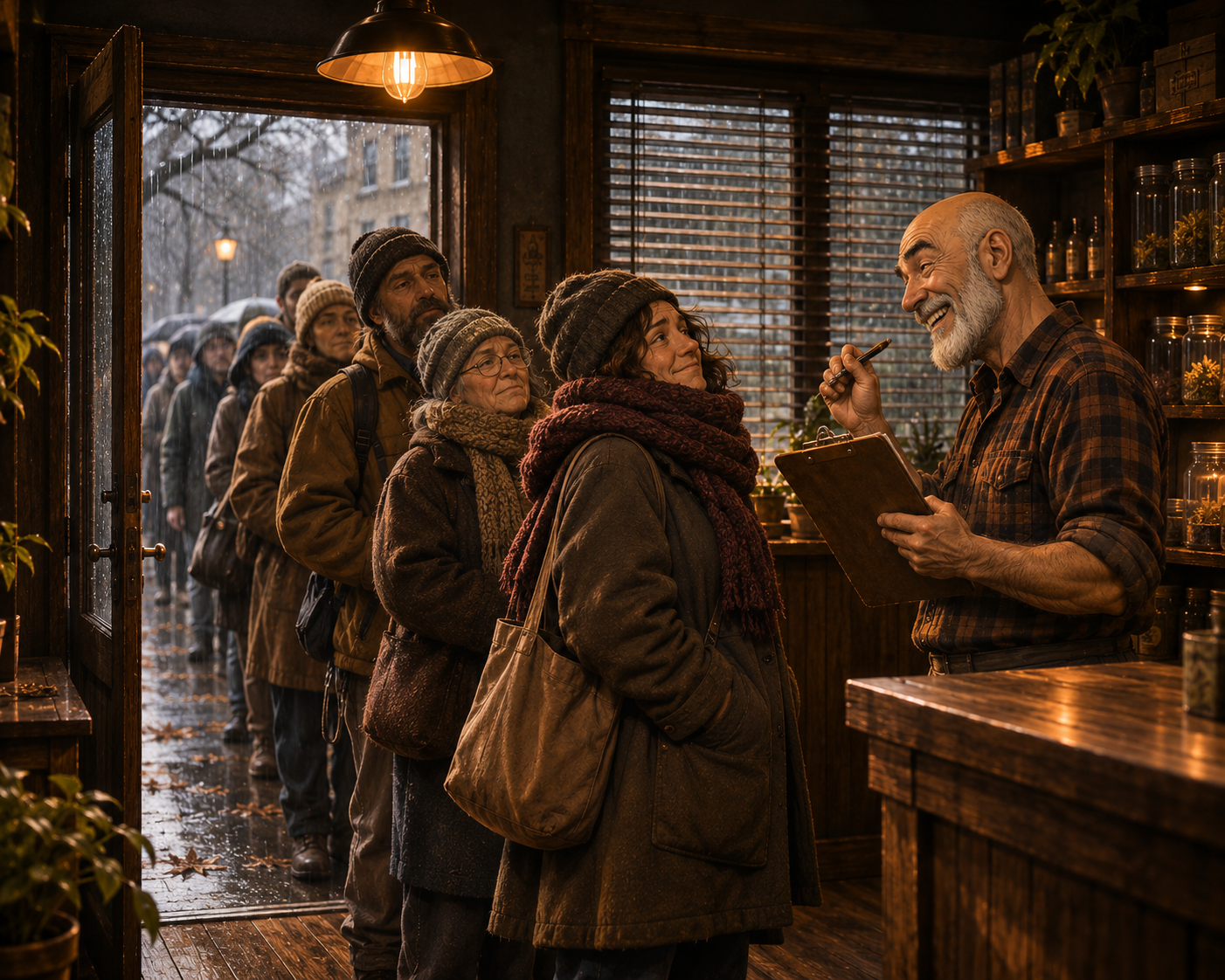
Berny and I had been working the counter like an assembly line since open. I checked IDs. Berny asked the question. Every customer got the same one, fast, and every customer had an answer ready, because nobody comes in on Green Wednesday to browse.
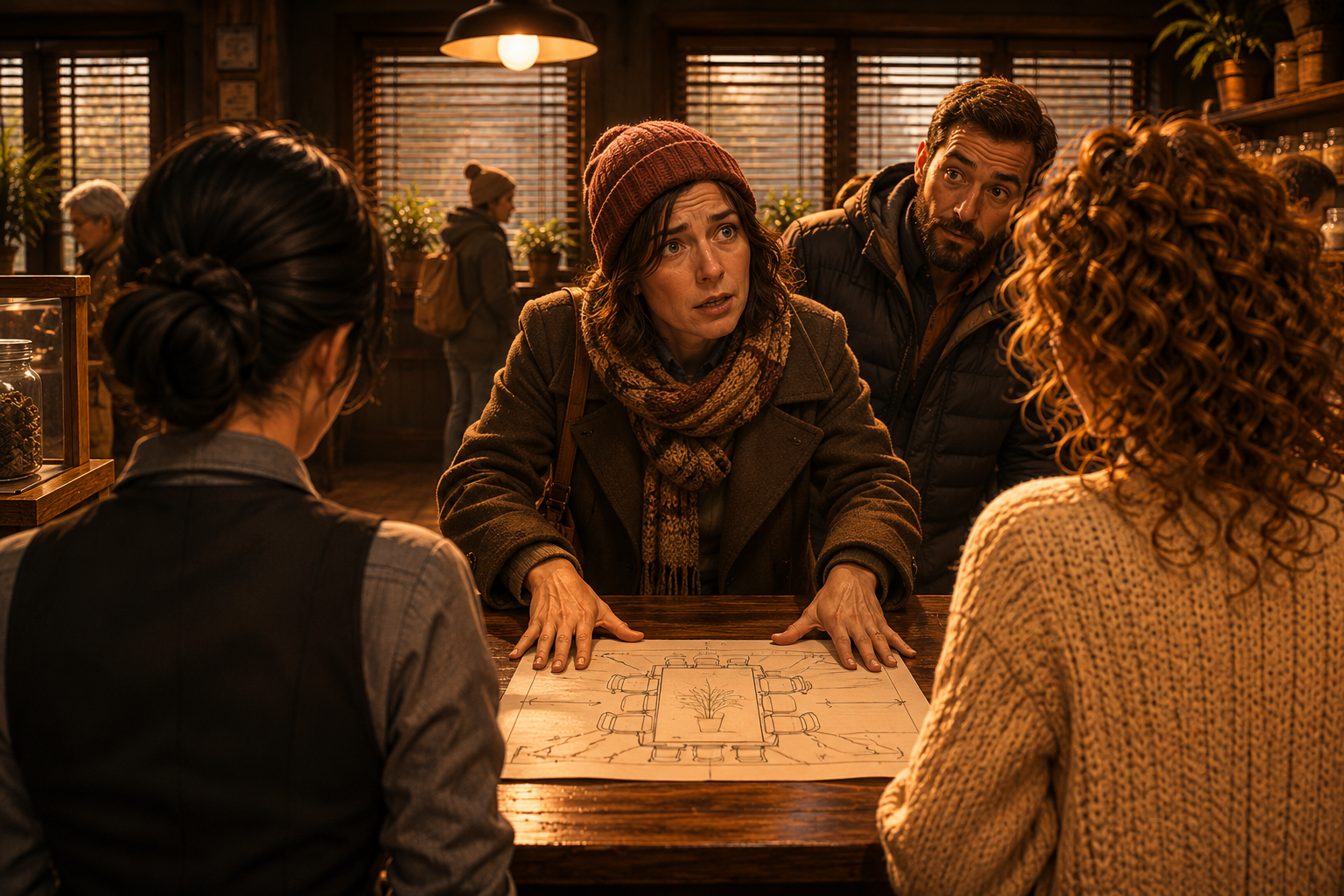
The woman at the counter had been holding her place since before Texas. Early thirties. Hand-knit beanie, dark brown hair coming loose around the edges like it had somewhere else to be. Coat buttoned one hole off. Phone open to a note that scrolled for a while.
“Hi there,” Berny said. “What can we get for you?”
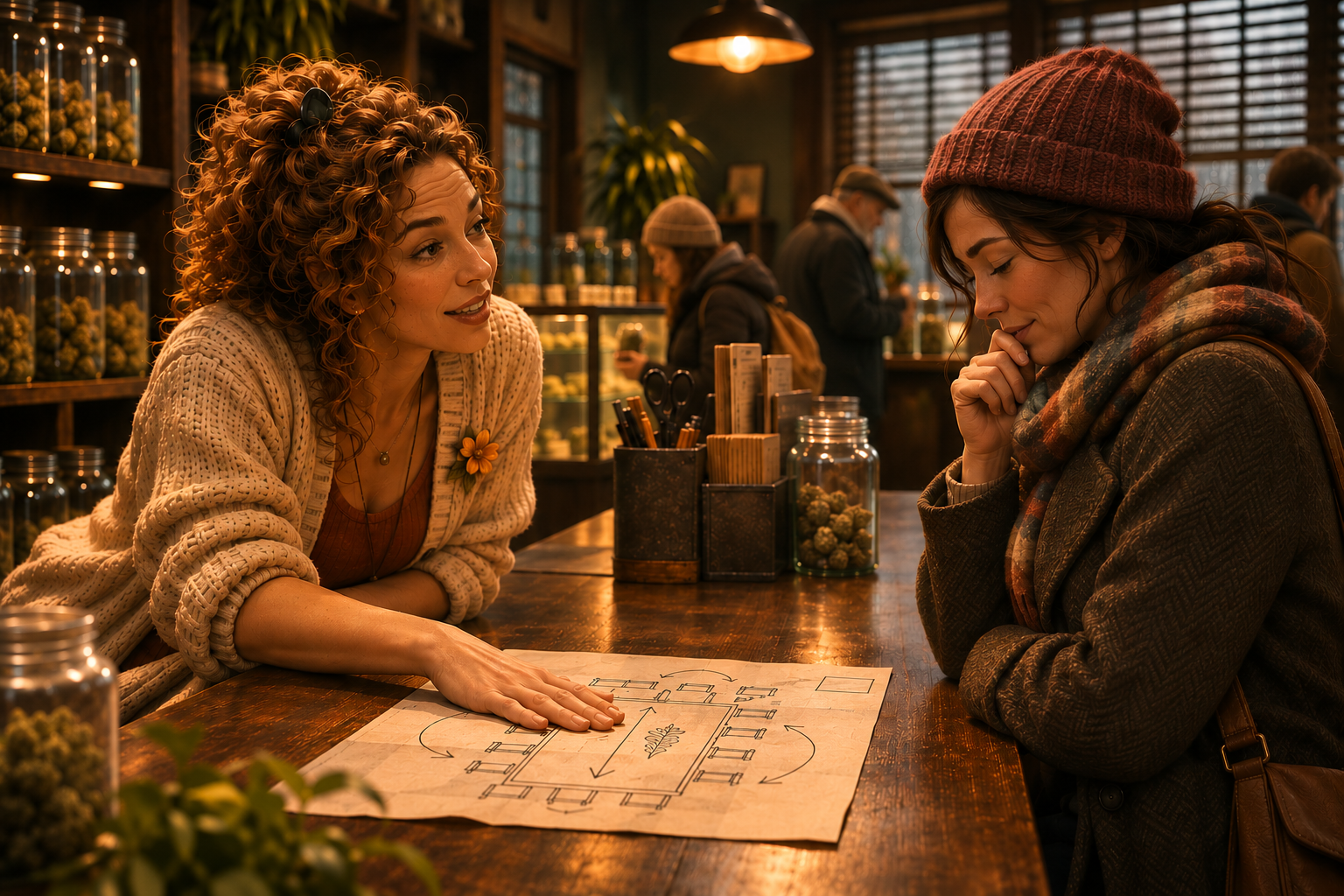
She didn’t answer. She unfolded a sheet of paper and smoothed it flat on the counter.
Berny looked at it. I looked at it. The man behind her looked at it. Nobody on our side of the counter had a script for this.
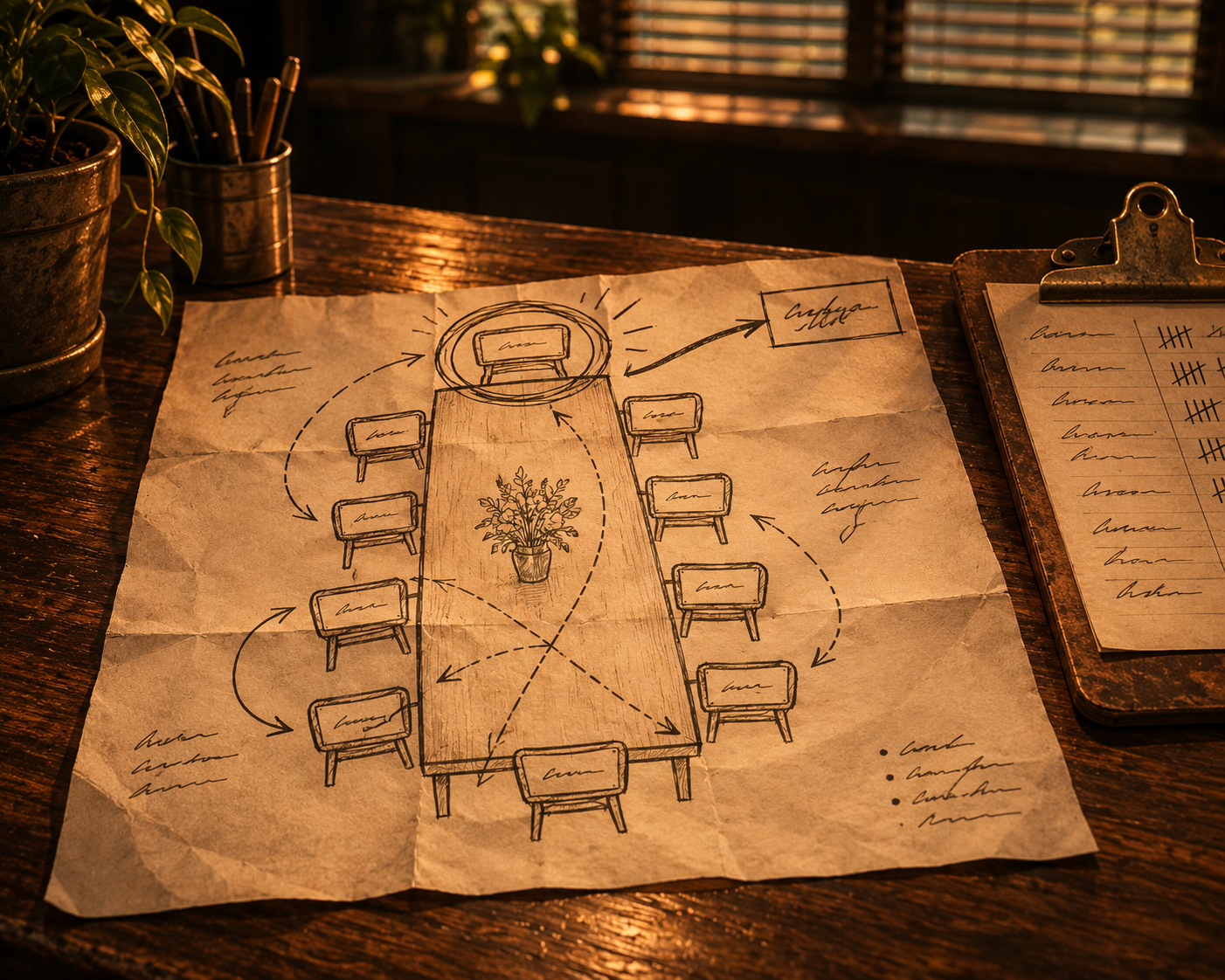
It was a seating chart. Printed. Eleven chairs around a long rectangle, a name in each one. Hers was at the far end, circled twice. There were arrows. One of them went to the kitchen.
I’d seen surveillance diagrams with less planning in them.
“My in-laws,” she said.
She walked us through it. Her father-in-law, at the head: retired high school principal, thirty-one years, still said “gateway” like it was a building he’d personally toured. Her mother-in-law, to his right, who didn’t mind cannabis so much as she minded the Anthonys, the neighbors who came over for pie and talked to everyone.
“And Aunt Ruth.” She tapped a chair halfway down. “Nobody knows what Aunt Ruth thinks.”
“What does your husband say?” Berny asked.
“My husband says it’ll be fine.” She folded her hands on the chart. “My husband has never once been right about his father.”
“New York,” Pete called from the door. “Two of ’em. First-timers.” He sounded like he’d landed a fish.
Berny leaned in. “Let’s practice. Roz can be your father-in-law.”
I didn’t agree to anything. I just stood there.
“Go ahead,” Berny told her. “Like it’s dinner.”
The woman took a breath. “So. I stopped by a dispensary yesterday, and...”
I looked at her.
That was all. I didn’t change my face. I didn’t change anything. I just looked at her the way I look at an invoice that doesn’t match.
She stopped. Her ears went pink. “...and they had, um. Lovely parking.”
Berny made a T with her hands. “Timeout.”
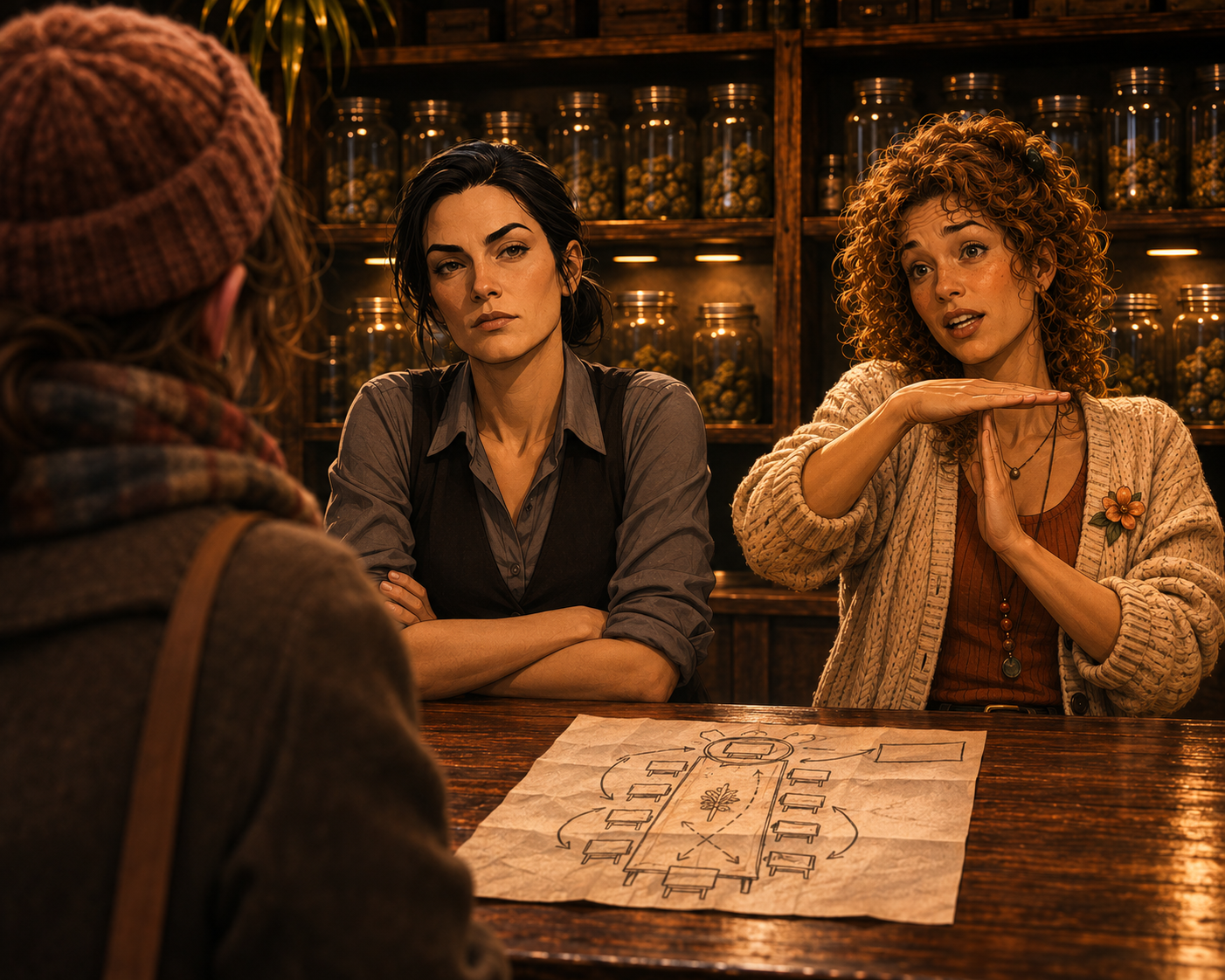
“I didn’t say anything,” I said.
“You didn’t have to.”
“Hawaii,” Pete called. “In November. Brave man.”
They tried again. She got further this time, past “dispensary,” almost to the end of her sentence.
Then I tilted my head a quarter inch and let my voice go somewhere bright.
“Did they have anything,” I said, “chewable?”
The woman stared at me. Berny stared at me.
“Aunt Ruth,” I said.
“Timeout,” Berny said again, slower.
“Florida,” Pete called. “Fourth Thanksgiving up here in a row. Says she keeps forgetting it rains.”
Berny put her hand flat on the seating chart, right over the father-in-law. “Here’s the thing,” she said. “You don’t owe anybody a debate over dinner. You don’t have to bring it up at all. It’s your business.”
“And if he brings it up?”
“Then you say one thing, and you pass the potatoes.” Berny thought for a second. “It helps me unwind. I’m not asking anyone to join me.”
The woman said it. Then she said it again, quieter, and again, until it stopped sounding like something she’d borrowed.
Berny let it sit for a second. Then she straightened up, and it was Green Wednesday again. “Now,” she said. “What can we get for you?”
This time the woman had an answer.
A few minutes later she folded the seating chart along its creases and tucked it into her coat. She stood a little straighter than when she came in. Her buttons were still off by one. I didn’t mention it.
Pete caught her at the door with the clipboard. “Where you visiting from, hon?”
“Here,” she said.
“Local,” Pete said, and wrote it down like it was the best one yet.
The line moved up. A man in a puffy jacket stepped to the counter and gripped the edge of it with both hands.
“My uncle talks politics every year,” he said. “Every year. Through the pie.”
Berny smiled. “I know just the thing.”