
The Jar That Started A War
By Jeff Eckenrode

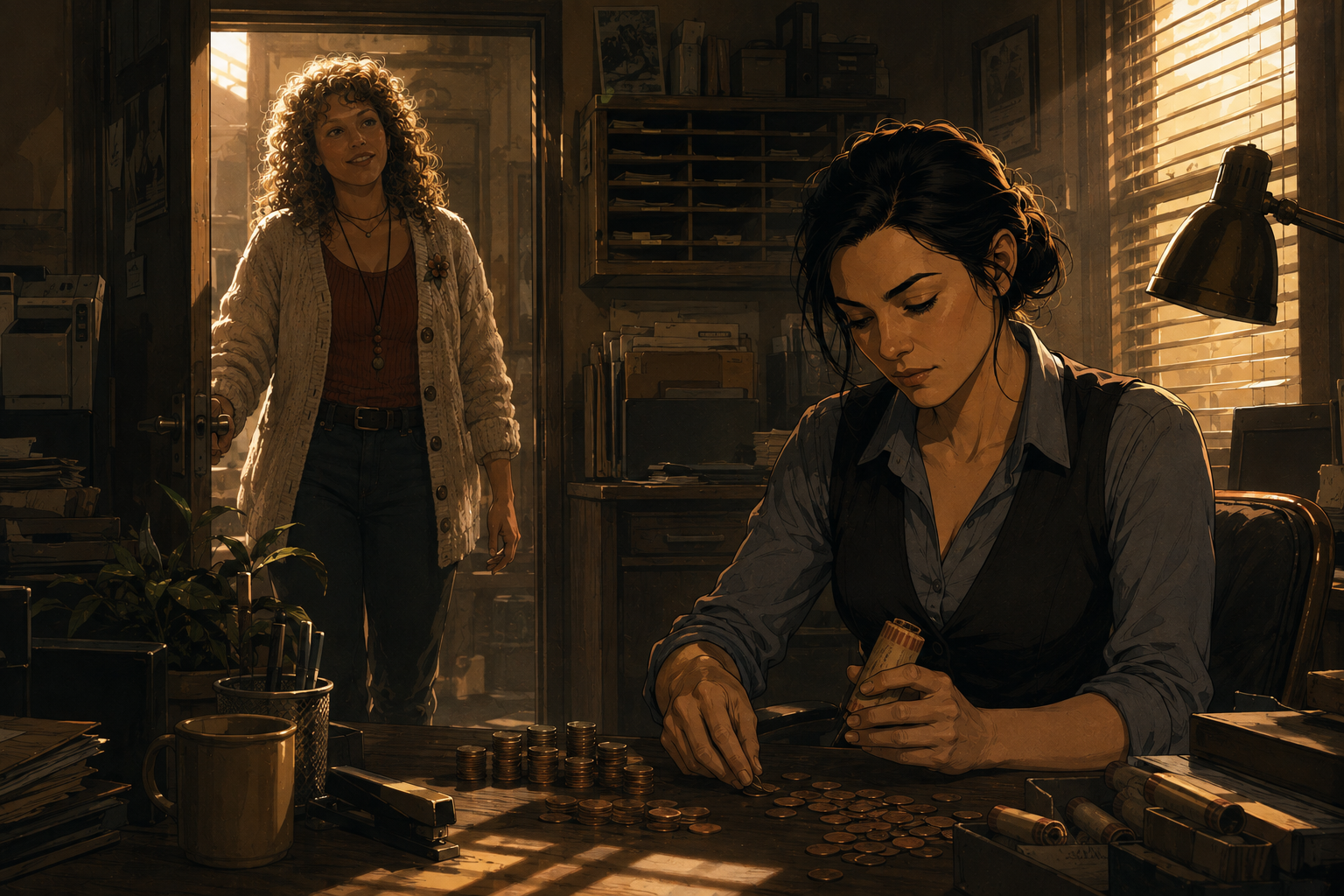
Berny found me in the back office, counting a roll of wheat pennies I already knew the value of as the late-afternoon sun streamed golden lines across the room, filtered starkly through dusty window blinds.
She told me a customer was "in crisis" out front. I asked what kind of crisis. She said a label crisis. I sighed as I set down the roll of coins on my old, coffee-ring-stained desk. I was about to tell her there was no such thing, but she was already pulling me by the sleeve down the hall into the shop.
The customer was a man with dark, meticulously combed hair wearing a fleece vest that cost more than my truck, standing over a jar like it had personally wronged him. He'd bought an eighth labeled Blue Dream. He was now, by his own account, "pretty sure" it was something else entirely, because it didn't taste the way it did at a shop two towns over, back before this town had valet parking anywhere.
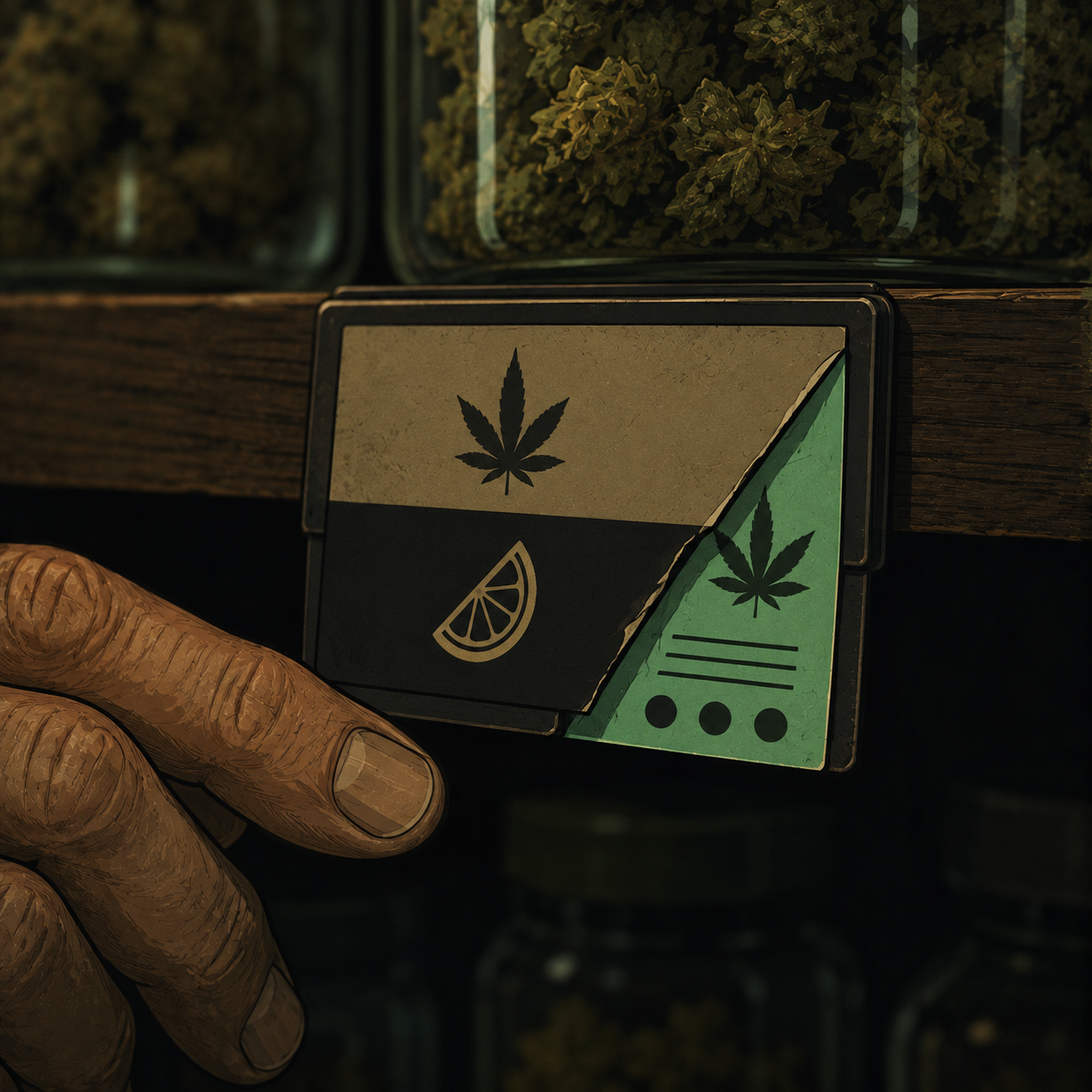
Berny asked him gently to briefly walk her through it. He did, and at length. I studied the jar. The label was correct. The handwriting on the shelf tag, however, was not the same as the label, because Old Pete restocks by feel and writes numbers like he's still doing inventory on a legal pad in 1994.
"It's the wrong jar," the man said.
“Correction: It's the wrong tag," I said.
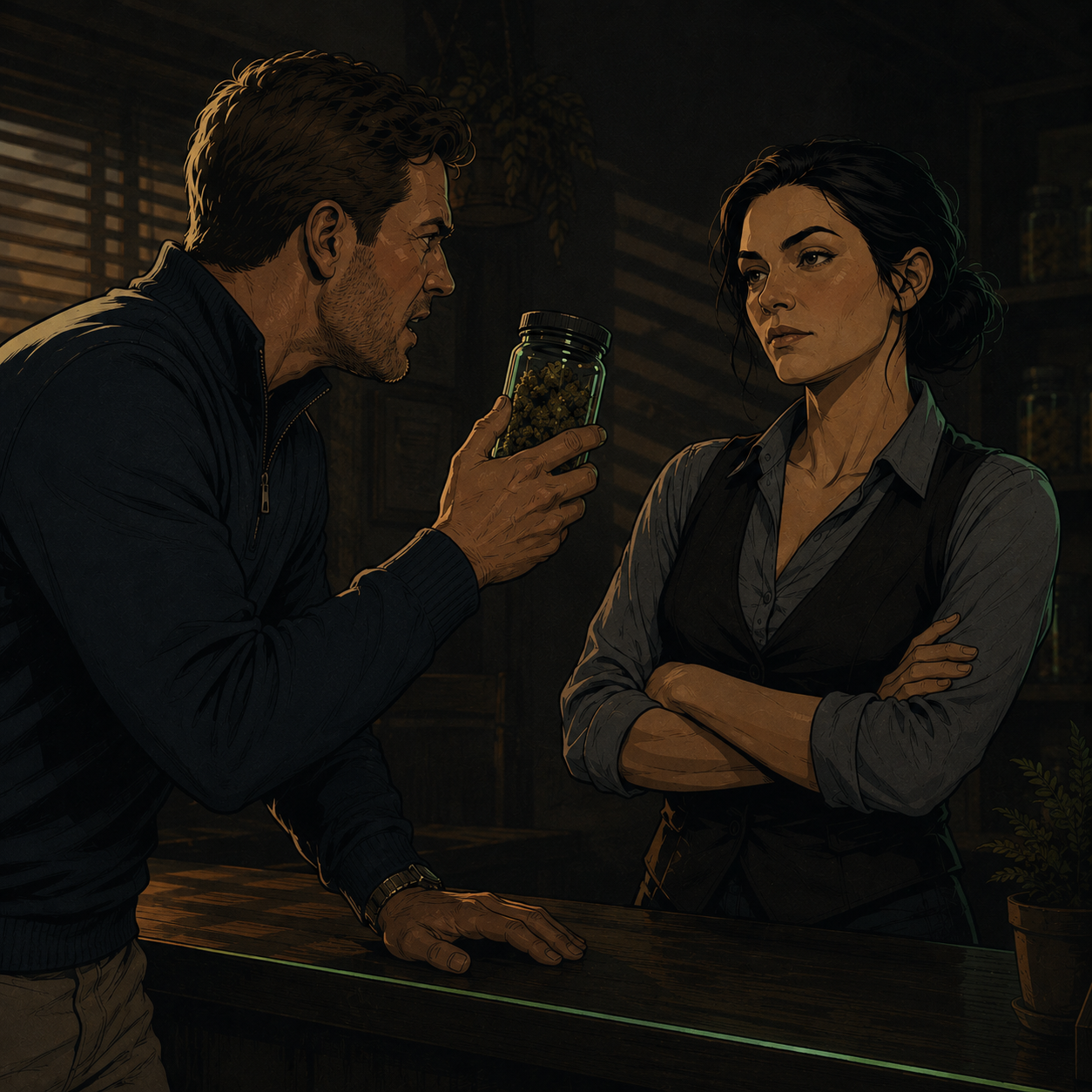
He didn't like that distinction. Then again, people rarely do when the distinction gently taps on the fragility of their main character energy.
I checked the lot number against the manifest, the kind of tedious cross-referencing nobody thanks you for and everybody demands the moment it's not done. Same strain. Same lot. Somebody had just eyeballed the shelf tag from memory instead of the label, which happens about four times a day now that the shelf is twice as long as it used to be.
I told him the product was correct, the tag was sloppy, and no conspiracy was afoot. He looked almost disappointed until Berny stepped in, telling him she'd get him squared away with a fresh jar and a tag that actually matched what was inside.
That was Berny for you, though: always refolding the story into something with a happier shape. The man kept his pride, at least, as he headed back out into a town that kept getting bigger and shinier than it used to be.
I didn't share the sentiment. I went back to my pennies. Somewhere under all that fleece and outrage was a man who'd never once had to squint at a coin to know exactly what it was worth.
That part, at least, I understood.