
Roz’s Headache
By Jeff Eckenrode
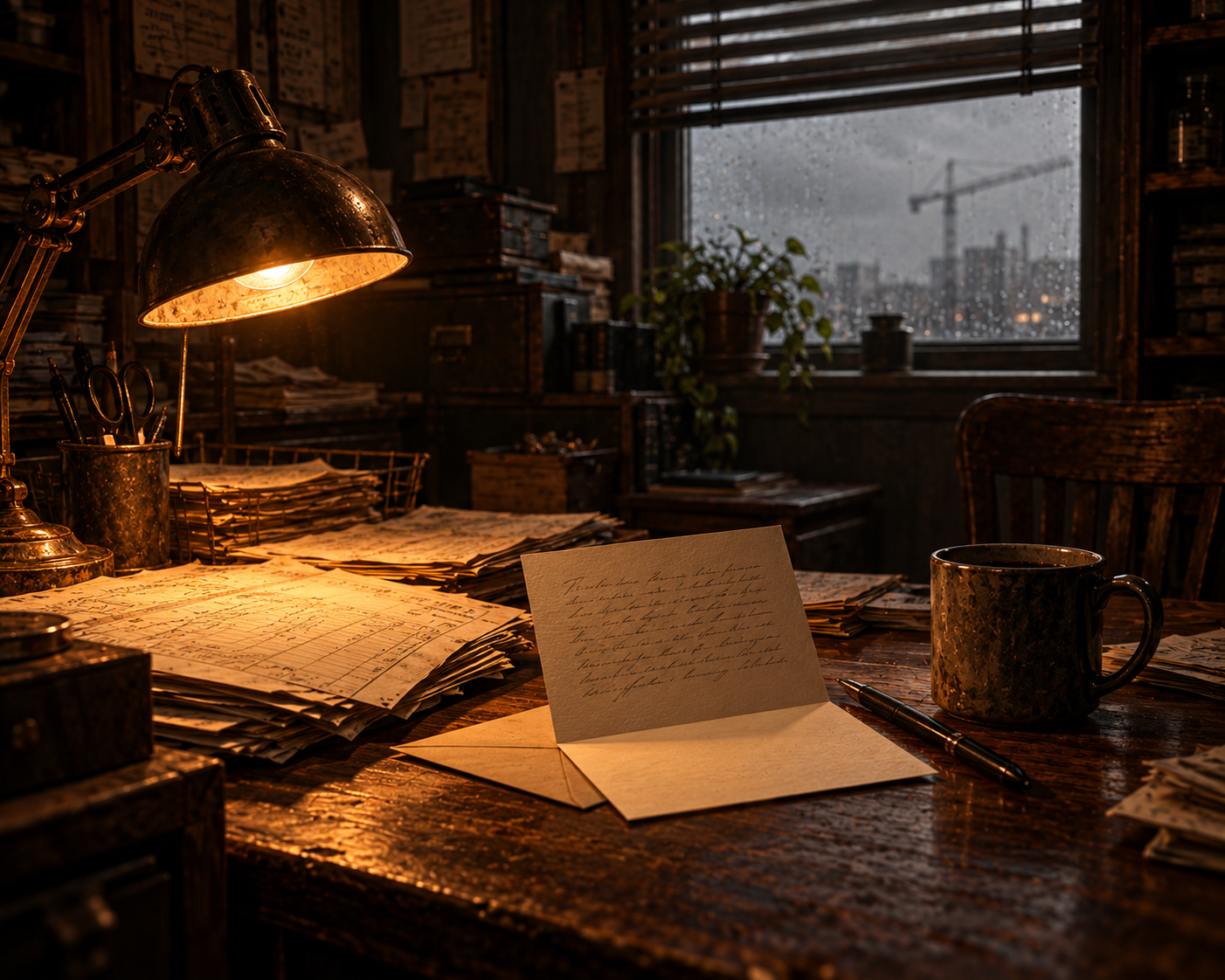
The purchase order said twelve cases. The invoice said ten. The delivery slip, signed by someone whose handwriting looked like it had been done in a moving truck, said eleven. Three documents, three stories, and none of them were going to confess.
It was Monday. I’d been at it since six, which this time of year was long before sunrise. The desk lamp made a small yellow island on the paperwork spread across the desk, and my coffee had gone cold an hour ago without telling anyone. Outside the back office window, the sky had turned from black to the color of wet cement and decided that was enough.
Down the block, they were putting up another building. Nobody had told me what it was going to be. The jackhammers didn’t keep a schedule. They’d run for a minute, stop just long enough for me to find my place in a column, then start again the second I did. Somewhere behind my left eye, a smaller crew had started work of their own.
On the corner of my desk sat the card.
It had been there the whole weekend. Plain envelope, flap open, waiting with the kind of patience only paper has.
Pete’s anniversary. Everyone had signed it. Berny’s message took up half the inside and was still going when it ran into the fold. Below it was a blank space about two fingers wide, saved for me.
I moved the card to the other corner of the desk. It didn’t help. The headache moved with it.
At eleven the jackhammers started up again and I put on my coat. It was Monday. I went to Marv’s on Mondays anyway.
Outside, a thin rain was still deciding whether or not to commit. The new building was mostly plywood fence and a crane that hung over the block like it was waiting for permission. A fine layer of gray dust had settled on every parked car between our door and Marv’s.
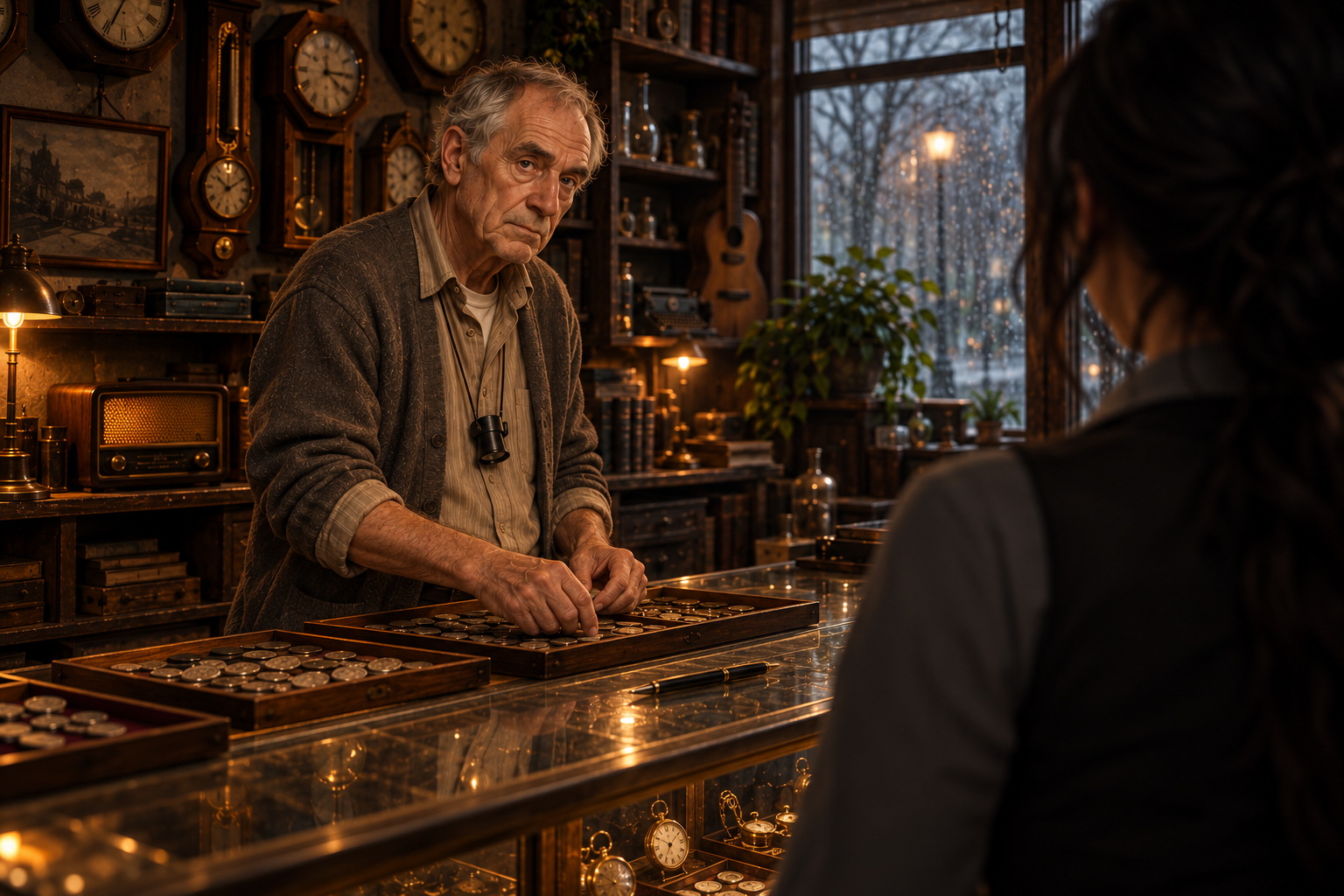
The bell over his door rang when I came in and kept ringing after I’d closed it, settling slow. Marv didn’t look up. He was bent over a tray at the counter, shoulders curved forward the way they’d been curving for forty years, sorting coins by wear with hands that didn’t need him to watch them anymore.
It wasn’t quiet inside. Every clock on the back wall ticked on its own time, none of them agreeing. A radio under the counter played something low with a lot of brass in it. The headache had followed me over. It seemed to like the clocks.
“They’re tearing up the block again,” I said. “I can’t hear myself think.”
Marv sorted a nickel, as bothered as the nickel was. Which was to say: not at all.
“And your clocks,” I said. “How do you stand it?”
He let me finish. Marv could outwait a monk. He let a little extra time go by after I’d finished, too. Then he looked at the tray, and then at me.
“You haven’t looked at the tray.”
I hadn’t. I come in every Monday to see what he took in over the weekend. I’d been standing there five minutes and hadn’t looked at a single coin.
“There’s a card,” I said.
Marv reached under the counter and slid a pen across to me.
“I have pens,” I said.
“Then it isn’t the pen.”
He went back to sorting. On my way out I looked at the tray. There was a Mercury dime in the corner, worn nearly smooth, the wings on her cap almost gone. I left it where it was.
When I got back, the jackhammers had stopped. Whether it was for a moment or for the day, I couldn’t tell yet.
The office was quiet enough to hear the light humming. Nothing left to blame.
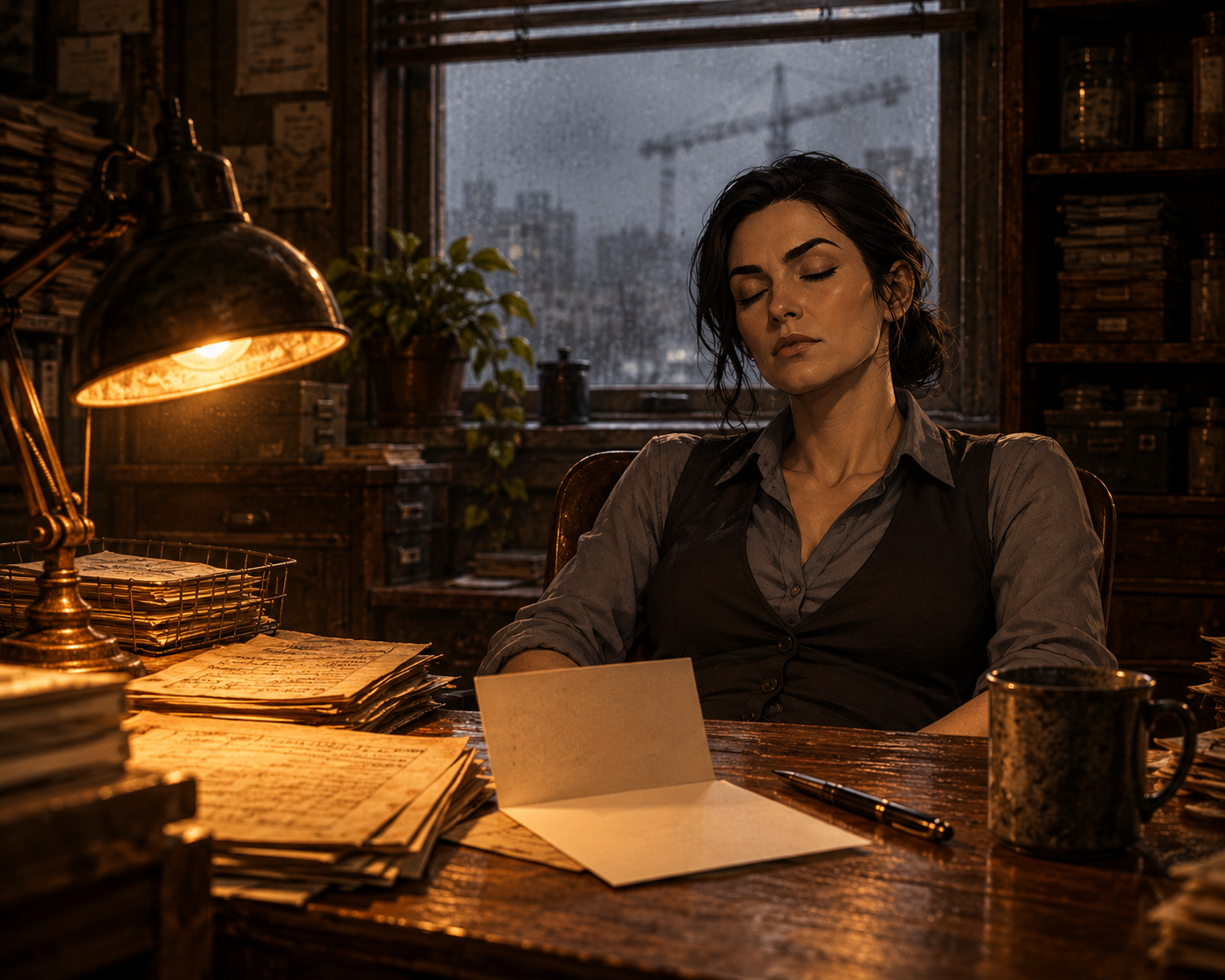
I closed my eyes and waited for inspiration or a meteor to strike, whichever came first. After a while it was clear neither was on its way. So I wrote one line. It took less time than reconciling a single invoice.
Pete got the card at the end of his shift. Berny handed it to him across the counter like she was presenting him with a diploma. He opened it and read hers out loud, all of it, his voice going soft somewhere around the fold.
“Bern,” he said, wiping his eye with the back of his wrist, “you’re gonna make an old man cry.”
“Oh, Pete, you’re not that old,” Berny said.
“I’m crying, though.”
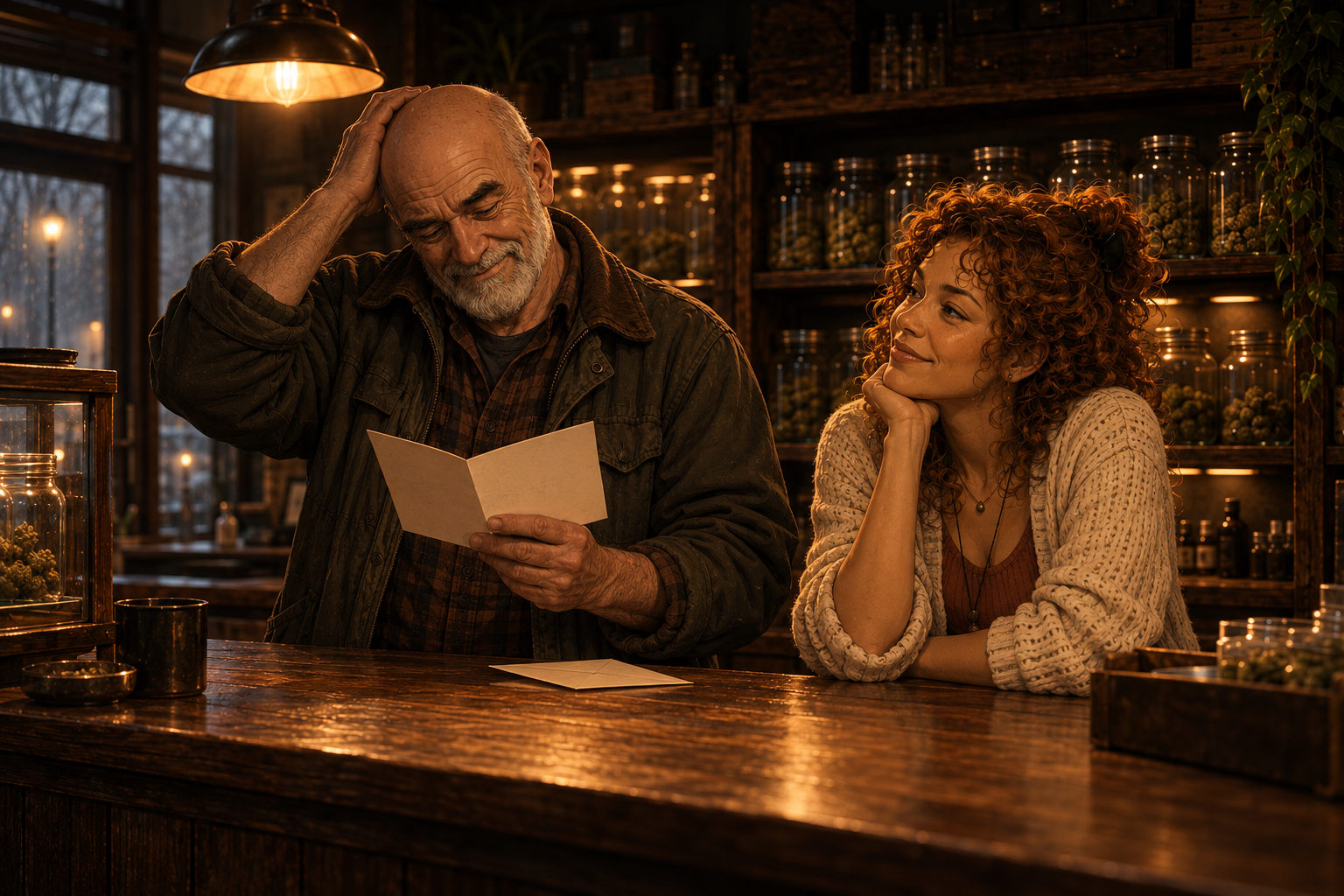
Then he got to mine. I watched him read it. It didn’t take long.
The grin came slow. “Well, would you look at that. Short and to the point.” He ran a hand over his scalp. “Like my last haircut.”
Down the block, the jackhammers started up again.