
How Does Cannabis Affect Sleep?
By Jeff Eckenrode

Image credit : Greg Rakozy
Quick Answer: Cannabis may improve sleep by helping users fall asleep faster, increasing deep rest, and easing anxiety or pain. THC can promote drowsiness but may reduce REM sleep, while CBD helps calm the mind and body. Terpenes like myrcene and linalool add sedative effects. Results vary, but mindful use can make cannabis a helpful sleep aid.
A good night’s sleep is one of the most important parts of overall health—and also one of the hardest to achieve for many adults.
For centuries, cannabis has been used as a natural sleep aid, and today it remains one of the most common reasons people turn to the plant.
But how exactly does cannabis affect sleep, and what does the science say?

Image credit: Milad Fakurian
THC and Sleep
THC, cannabis’s primary psychoactive compound, is closely linked to sleep effects.
Research suggests THC can help users fall asleep faster and may increase time spent in deep sleep (slow-wave sleep)—the restorative stage that helps the body repair and recover.
However, high doses of THC can sometimes cause next-day grogginess or reduce time spent in REM sleep, the stage tied to dreaming and memory processing. That’s why strain choice and dosage matter.

Image credit: Jeffrey Riley
CBD and Sleep
CBD works differently. While it’s not sedating in the traditional sense, CBD may support better sleep by reducing anxiety, pain, or inflammation that keeps people awake.
Some studies suggest higher doses of CBD have direct calming effects, while lower doses may actually be slightly alerting.
For many, combining THC and CBD creates a balance that encourages relaxation without leaving them overly sedated.

Image credit : Zoltan Tasi
Terpenes and the Entourage Effect
Cannabis’s impact on sleep isn’t just about cannabinoids.
Terpenes, the aromatic compounds in cannabis, also play a role.
Strains high in myrcene, linalool, or terpinolene are often associated with calming or sedative qualities.
Together, cannabinoids and terpenes may create the entourage effect—a synergistic blend that enhances overall sleep support.

Image credit: Hal Gatewood
The Science So Far
While cannabis shows strong potential as a sleep aid, the research is still evolving.
Short-term use often improves sleep quality, but long-term heavy use may lead to tolerance or disrupted sleep cycles.
That’s why many medical professionals recommend starting with low doses, using cannabis as a short-term aid, and pairing it with healthy sleep habits.

Where can I find Cannabis products for sleep?
Whether you’re shopping online or in Redmond, we’re here to help you find what you need, when you need it. That includes sleep focused cannabis products!
Currently we carry Green Revolution’s Beauty Sleep tincture: a popular option, especially for those who have never tried cannabis before.
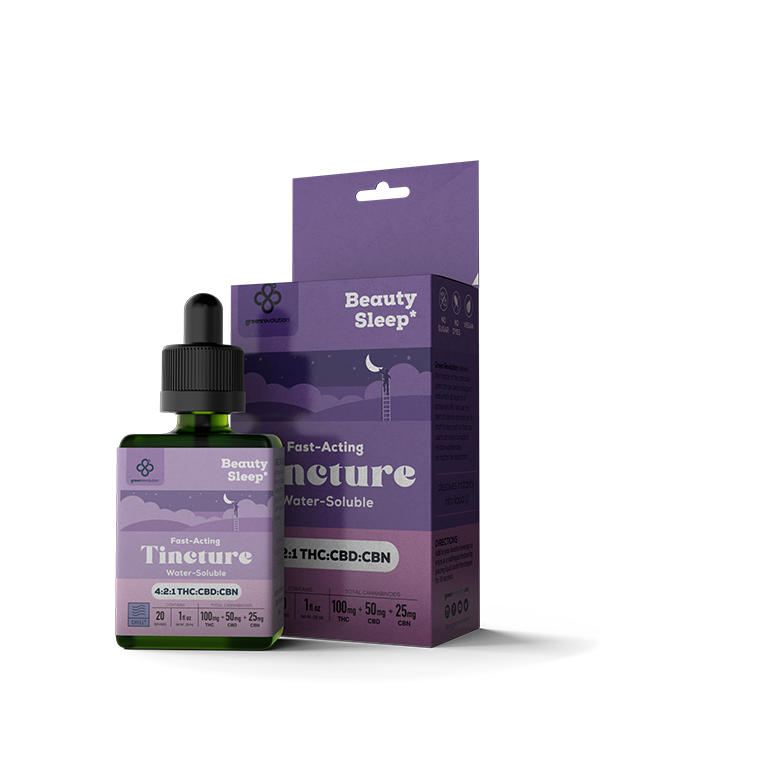
Image credit: Green Revolution
What makes Beauty Sleep by Green Revolution?
Green Revolution is committed to making products that are convenient, fast-acting and consistent.
That’s why their Beauty Sleep tincture is water-based. So you can take it sublingually or seamlessly add it to any drink you like.
Want to learn more? Visit their website at: https://greenrevolution.com/product/water-tinctures-beauty-sleep/
Want to buy some today? Click on our online menu link below to see our current availability.
FAQ: Cannabis and Sleep Guide
Can cannabis help you fall asleep faster?
Many people report falling asleep more quickly after using cannabis products designed for relaxation. Effects depend on cannabinoid balance, terpene profile, and individual tolerance.
What type of cannabis experience is best for sleep?
Sleep-focused experiences typically emphasize calming effects, body relaxation, and mental quiet rather than stimulation or intense cerebral activity.
Which aromas or terpene profiles are commonly linked to sleep support?
Earthy, floral, and herbal aromas associated with myrcene, linalool, and caryophyllene are often chosen for evening use and winding down.
Does cannabis improve sleep quality or just make you sleepy?
Some users report deeper relaxation and fewer nighttime disruptions, while others mainly notice easier sleep onset. Individual responses vary widely.
Is cannabis better for occasional sleepless nights or nightly routines?
Many people use cannabis occasionally to reset sleep schedules or decompress after stressful days, while others incorporate it into consistent evening routines.
When should cannabis be used before bedtime?
Timing varies by format, but many people choose to use cannabis 30–90 minutes before bed to allow relaxing effects to fully develop.