
Edibles Deep Dive: Understanding Onset Time, Metabolism & Dosing
By Jeff Eckenrode

Image credit: Kyaw Tun
Quick Answer: Cannabis edibles take longer to kick in than smoking or vaping because they are processed through the digestive system and metabolized by the liver. This slower onset also means longer-lasting effects and a different experience overall. Dosing edibles safely—especially for beginners—comes down to starting low, going slow, and understanding how your body processes THC.
For most people, edibles can take a while to kick in.
Initial effects can take anywhere from 30 minutes to 2 hours to arrive.
And peak effects can take between 2 to 4 hours.
In total, a full edible experience may last 6 to 8 hours or longer, depending on dose, metabolism, and tolerance.
But why is that?
Why do edibles take so long to kick in? How can I dose edibles safely? And what should I know before I take my first bite?
Image credit: Margo Amala
Why do edibles take so long?
Several factors influence onset time:
Whether you’ve eaten recently
Your metabolism and body chemistry
The type of edible (gummy, baked good, beverage)
THC dose and formulation
Because the effects aren’t immediate, edibles require patience. Taking more too soon is one of the most common mistakes new consumers make.
Image credit: WYLD
Why Do Edibles Take Longer Than Smoking or Vaping?
The difference comes down to how THC enters the bloodstream.
When you smoke or vape cannabis, THC is absorbed through the lungs and enters the bloodstream almost immediately. Effects are often felt within minutes.
Edibles work differently:
THC is absorbed through the digestive system
It travels to the liver
The liver converts THC into 11-hydroxy-THC, a compound that is often more potent and longer-lasting
This converted THC then enters the bloodstream
This process takes time, which explains both the delayed onset and the stronger, longer-lasting effects many people associate with edibles.
Image credit: Alex Gorey
How Are Edibles Processed by the Body?
Once consumed, an edible must be digested before THC can be absorbed. This means:
Slower onset compared to inhalation
More variability from person to person
Effects that build gradually rather than all at once
Because of liver metabolism, edibles can feel more intense—even at lower doses—especially for people who are new to cannabis or sensitive to THC.
Image credit: Journeyman
How Do I Dose Edibles Safely?
Safe dosing is all about control and patience, particularly for beginners.
General Edible Dosing Guidelines:
Beginner: 2.5–5 mg THC
Moderate: 5–10 mg THC
Experienced: 10 mg+ THC (with caution)
Washington State limits solid edibles to 10 mg THC per serving, which helps support safer consumption.
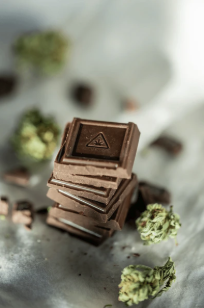
Best Practices for Safe Edible Use:
Start with one low-dose serving
Wait at least 2 hours before considering more
Avoid mixing edibles with alcohol
Consume in a comfortable, familiar setting
Read labels carefully and understand serving sizes
If effects feel stronger than expected, stay calm, hydrate, rest, and remember that the experience will pass.

Where Can I find cannabis edibles?
Whether you’re shopping online or in Redmond, we’re here to help you find what you need, when you need it. That includes a huge range of liquid and solid edibles!
Click on our online menu link below to see our current availability.
FAQ Edibles Deep Dive
Why do cannabis edibles take so long to kick in?
The delay is entirely about how your body processes the THC. When you smoke or vape, THC passes directly through the lung tissue into the bloodstream — the entire process takes seconds and effects are felt within minutes. Edibles work through a fundamentally different pathway: the THC must first travel through your digestive system, be absorbed through the intestinal walls, and then pass through the liver before entering general circulation. The liver adds an extra step by converting THC into 11-hydroxy-THC, a metabolite that is often more potent and longer-lasting than THC itself. This entire process takes between 30 minutes and 2 hours depending on your metabolism, body composition, and what you've eaten recently.
What is 11-hydroxy-THC and why does it make edibles feel stronger?
11-hydroxy-THC is the compound your liver produces when it metabolizes THC from an edible. It's a more psychoactive metabolite than THC itself — it crosses the blood-brain barrier more efficiently and tends to produce a more intense, longer-lasting effect than inhaled THC at equivalent doses. This is why experienced cannabis consumers who smoke regularly can be genuinely surprised by the strength of edibles even at doses they might consider modest. The conversion to 11-hydroxy-THC doesn't happen when you inhale cannabis — it's specific to oral consumption — which is what makes edibles a fundamentally different experience rather than just a delayed version of smoking.
How long does an edible experience last?
Significantly longer than inhaled cannabis. Initial effects typically arrive between 30 minutes and 2 hours after consumption. The peak experience — where effects are most pronounced — usually occurs between 2 and 4 hours in. The full edible experience, from first effects through gradual comedown, typically lasts between 6 and 8 hours, though higher doses and individual metabolism can extend this further. This extended duration is actually one of the reasons many medical cannabis users prefer edibles — the sustained effect can be valuable for managing chronic discomfort through a full day or night without needing to re-dose frequently.
What is the right starting dose for edibles?
For beginners, the universally recommended starting point is 2.5 to 5mg of THC. Washington state's regulated edible market caps single servings at 10mg, which itself is considered a moderate dose — beginners should start at half that or less. The most important rule of edible dosing is the 2-hour rule: after consuming a dose, wait a full 2 hours before deciding whether to take more. The most common edible mistake is taking a second dose because "nothing is happening" only to have both doses arrive simultaneously for an overwhelming experience. Start low, wait long, and adjust from there.
What factors affect how quickly edibles kick in?
Several variables influence your onset timeline in meaningful ways. Whether you've eaten recently is one of the most significant — consuming an edible on a full stomach slows absorption as your digestive system prioritizes processing food, while an empty stomach can accelerate onset considerably. Your individual metabolism and body composition play a role, as does the type of edible: beverages and sublingual products tend to absorb faster than baked goods and gummies. The formulation also matters — nano-emulsified edibles marketed as "fast-acting" use smaller THC particles that absorb more quickly through the digestive tract. Higher THC doses also tend to produce faster-felt effects than micro-doses.
What should I do if I've taken too much from an edible?
First and most importantly: stay calm. Cannabis edibles cannot cause a fatal overdose, and the uncomfortable experience will pass. Find a comfortable, familiar environment, drink water, and rest. Eating something light can help slow further absorption if you've consumed the edible recently. CBD, if available, may help reduce the intensity of THC's psychoactive effects. Avoid alcohol, which intensifies THC's effects significantly. Lying down, focusing on slow breathing, and reminding yourself that the experience is temporary are the most effective responses. Effects typically peak and then gradually diminish — the window of discomfort rarely lasts more than a few hours even at high doses.
Want to learn more about cannabis edibles and dosing?
Then check out our collection of related posts here!