
Understanding Cannabis Law: What’s Legal in Your State?
By Jeff Eckenrode

Image credit : Sasun Bughdaryan
Quick Answer: Cannabis laws vary by state: some allow recreational and medical use, others only medical, and some still prohibit it entirely. Despite state laws, cannabis remains federally illegal, and traveling across state lines with it is a federal offense. Always check your local laws before buying or using cannabis.
Cannabis laws in the U.S. can feel like a patchwork quilt: messy, colorful, and stitched together piece by piece.
What is legal in one state might land you in trouble just across the border.
So if you’ve ever wondered what’s actually allowed where you live, you’re not alone.
Here’s a quick breakdown of what you need to know about cannabis law and why it matters.

Image credit: Jinsoo Choi
Cannabis Is Still Federally Illegal
Let’s start with the big picture: Cannabis is still illegal at the federal level.
That means no matter how legal weed is in your state, it’s technically classified as a Schedule I controlled substance under federal law. In day-to-day life, this mostly affects things like:
Banking for cannabis businesses
Crossing state lines with cannabis
Access to federal housing or jobs
So yes, your state can say it’s legal. But the federal government still says it’s not.

Image credit: Stephen Monroe
State Cannabis Laws Vary (A Lot)
Now let’s zoom in. As of now, cannabis laws fall into a few broad categories:
Fully Legal (Recreational + Medical): States like California, Washington, Colorado, and Illinois allow adults 21+ to purchase, possess, and use cannabis for recreational or medical purposes.
Medical Only: Places like Florida, Pennsylvania, and Utah allow medical cannabis use, but not recreational sales.
Decriminalized: In some states, possession of small amounts won’t lead to jail time but might still result in a fine or citation.
Illegal: A handful of states still outlaw cannabis entirely, with penalties for possession, sale, or use.
And even within legal states, things can get tricky. Each one sets its own rules around how much you can buy, how much you can carry, where you can use it, and whether you can grow it at home.

Image credit: Suhyeon Choi
Can You Travel With Cannabis?
The short answer is no. Even if cannabis is legal in both the state you’re leaving and the one you’re visiting, crossing state lines with it is still a federal offense. That includes air travel (even if you’re flying out of a legal state.)
If you’re traveling, it’s best to leave your stash at home.
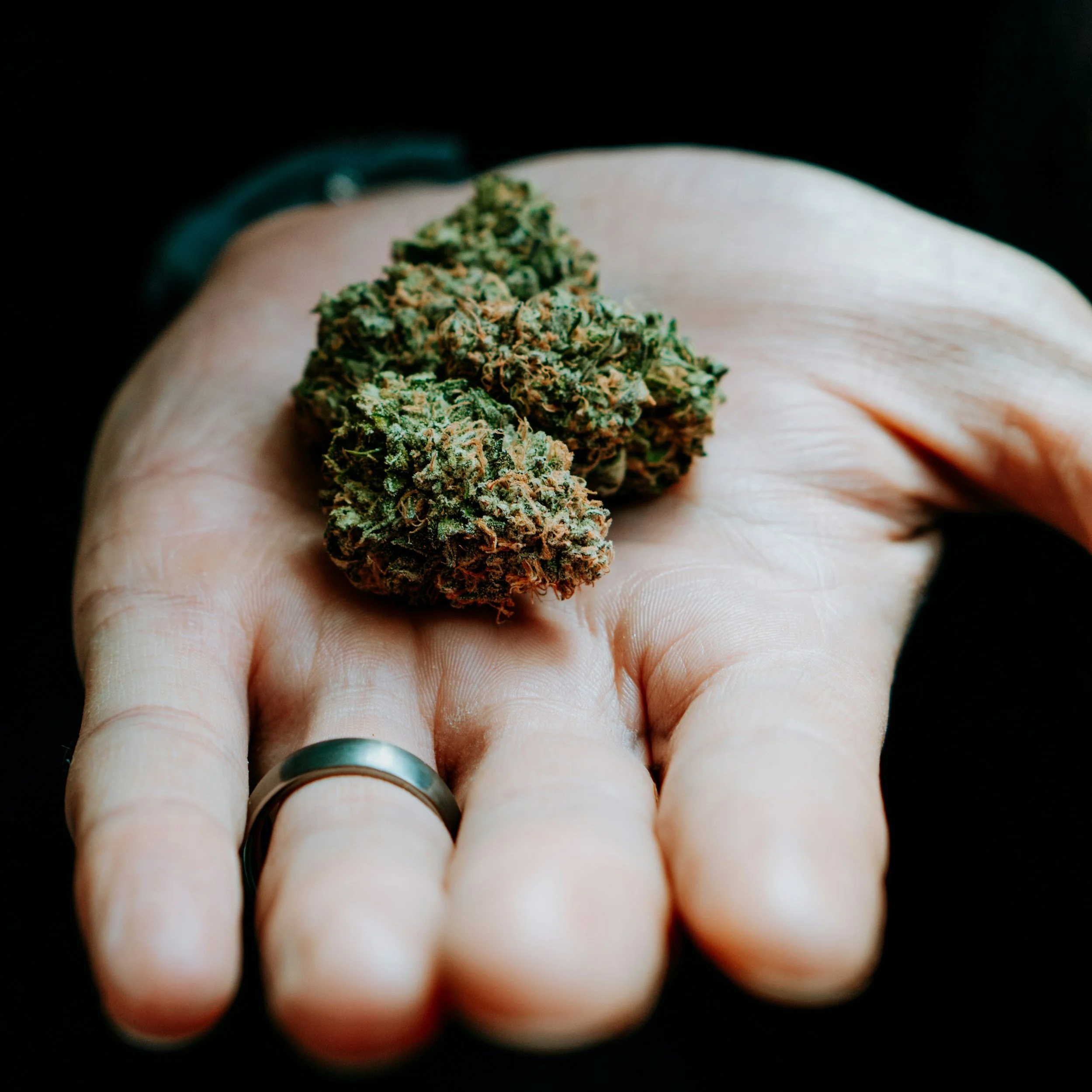
Image credit: Shelby Ireland
What About CBD and Hemp?
Thanks to the 2018 Farm Bill, hemp-derived CBD with less than 0.3% THC is federally legal, though states can still regulate it.
You’ll find CBD in everything from gummies to skin cream, but its legal status can still be murky in some areas.
If you're buying CBD, make sure it’s third-party tested and clearly labeled.

Image credit: Roman Kraft
Why Staying Informed Matters
Cannabis laws are changing fast. New ballot measures, court rulings, and state laws roll out every year. So if you use cannabis it’s worth checking your local rules from time to time.
Getting caught up in outdated laws isn’t just inconvenient: it can carry real-life consequences.

Image credit: Nico Smit
So, what’s legal in your state?
That depends on where you are. While more states are embracing legal cannabis, laws still vary widely (and the federal ban adds an extra layer of complexity.)
Your best move? Know your local laws, stay informed, and when in doubt, ask before you partake.
Where can I find Legal Cannabis Products?
Whether you’re shopping in Redmond or online, we’re here to help you find what you need, when you need it.
Click on our online menu link below to see our current availability.
FAQ Understanding Cannabis Law
Is cannabis legal in the United States?
It depends on where you are. Cannabis is still classified as a Schedule I controlled substance under federal law, making it technically illegal at the federal level nationwide. However, individual states have the authority to legalize it within their borders. As of 2025, states like Washington, California, Colorado, and Illinois allow recreational use for adults 21+. Others are medical-only, some have decriminalized possession, and a handful still prohibit cannabis entirely.
What does it mean for cannabis to be "fully legal" in a state?
Full legalization typically means adults 21 and older can legally purchase, possess, and use cannabis for both recreational and medical purposes at licensed retailers. However, even fully legal states each set their own rules around how much you can buy and carry at one time, where you can consume (typically private property only), whether home cultivation is permitted, and what products are available. Washington is a fully legal state with a robust regulated market.
What's the difference between cannabis being decriminalized vs. legalized?
Legalization means cannabis can be bought and sold legally at licensed businesses, with a regulated market in place. Decriminalization means possession of small amounts is no longer a criminal offense — but cannabis is still not legally sold through a regulated market. In a decriminalized state, you might receive a civil fine rather than criminal charges for small-quantity possession, but there are no licensed dispensaries and purchasing cannabis remains legally gray or prohibited.
Is it legal to travel between states with cannabis?
No. Even if cannabis is legal in both your origin and destination states, crossing state lines with cannabis is a federal offense because interstate transport falls under federal jurisdiction. This applies to driving, flying, and any other mode of interstate travel. TSA is required to report suspected violations on flights, and driving across a state border with cannabis can result in federal charges regardless of what either state's law says.
What is the legal status of CBD and hemp products across states?
Hemp-derived CBD with less than 0.3% delta-9 THC was federally legalized by the 2018 Farm Bill, though states retain the right to regulate it. CBD products are widely available across the country but their legal status can vary — some states have imposed restrictions. Always buy CBD products that are third-party tested and clearly labeled. Note that the November 2025 federal hemp loophole closure changed rules around intoxicating hemp-derived products, tightening the THC cap.
How often do cannabis laws change and how do I stay current?
Cannabis laws change frequently — new ballot measures, court decisions, legislative updates, and regulatory changes occur every year at both state and federal levels. What was true 12 months ago may not be accurate today. For Washington State specifically, the Washington State LCB website is the most authoritative source. The Cannabis Observer — a nonprofit tracking Washington cannabis legislation and supported by Hashtag — is another excellent resource. When in doubt, ask before you consume.
Want to learn more about cannabis laws and regulations?
Then check out our collection of related posts here!